
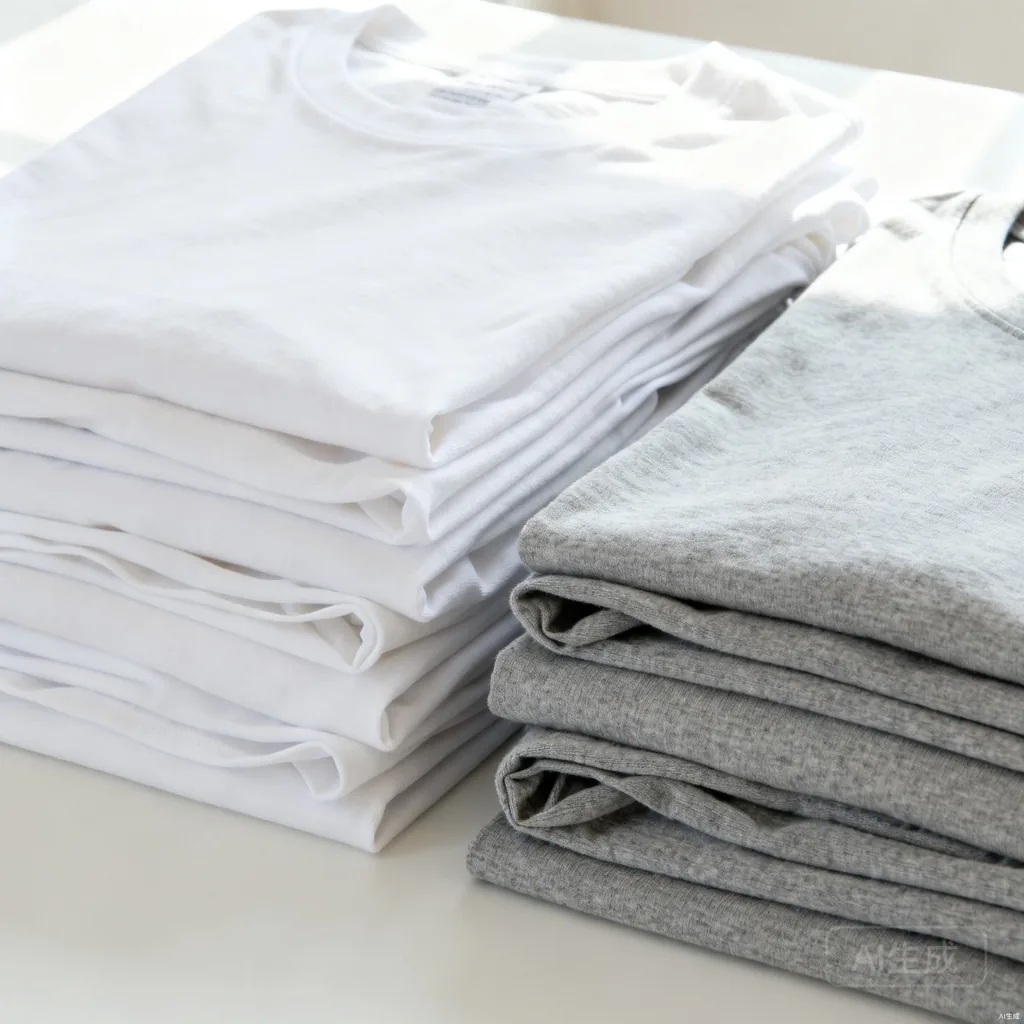
Choosing between 180 GSM and 200 GSM t-shirts is a common dilemma. Both are midweight options, but the 20 GSM difference affects feel, durability, and price. Here is how to decide.
What Is the Difference?
GSM (Grams per Square Meter) measures fabric weight. 180 GSM is lighter; 200 GSM is heavier. The 22 GSM difference translates to roughly 10-15% more fabric per shirt at 200 GSM.
Feel and Comfort
180 GSM: Lighter, more breathable, softer drape. Ideal for warm weather and everyday wear.
200 GSM: More substantial feel, holds shape better, slightly warmer. Feels more premium in the hand.
Durability
200 GSM is more durable due to denser fabric. It resists pilling, tearing, and wear better over time. However, 180 GSM made from combed cotton can outlast 200 GSM made from carded cotton.
Print Quality
Both weights work well for screen printing and DTG. 200 GSM provides a slightly more stable surface for detailed prints.
Price Difference
200 GSM costs roughly $0.30-0.60 more per shirt than 180 GSM due to additional fabric.
Best For
- 180 GSM: Everyday fashion, promotional events, warm climates, layering
- 200 GSM: Premium casual wear, streetwear entry-level, cooler climates, brand clothing
Conclusion
180 GSM for breathability and value; 200 GSM for premium feel and durability. Request fabric swatches to feel the difference.
Detailed GSM Comparison Chart
To make the choice clearer, here is a side-by-side comparison covering every factor that matters when choosing between 180 GSM and 200 GSM t-shirts for your custom apparel project.
| Factor | 180 GSM | 200 GSM |
|---|---|---|
| Weight class | Lightweight to midweight | Midweight |
| Typical feel | Soft, breathable, slightly sheer in lighter colors | Substantial, smooth, opaque |
| Drape | Flowing, relaxed | Structured, holds shape |
| Durability (wash cycles) | 40-60 washes before visible wear | 60-90 washes before visible wear |
| Print compatibility | DTG, screen printing (under 4 colors), DTF | DTG, screen printing (up to 6 colors), DTF, embroidery |
| Best for climates | Warm, humid, summer | Mild, layered wear, year-round |
| Typical price per unit (wholesale) | $2.80 – $3.80 | $3.40 – $4.50 |
| Lead time | 15-20 days | 15-20 days |
Industry Use Cases
Different industries gravitate toward different GSM weights. Here is how the choice typically breaks down.
180 GSM is preferred for: promotional events, summer campaigns, music festivals, beach resorts, hospitality uniforms in tropical climates, lightweight fashion basics, children’s programs, and screen-printed runs where vibrant colors on light fabric dominate.
200 GSM is preferred for: corporate uniforms, retail basics, layering pieces, embroidery-heavy designs, premium merchandise, gym and fitness brands (for squat-proof opacity), and any program where the t-shirt must look crisp and structured after multiple wears.
How to Decide for Your Brand
If you are still unsure, use this simple decision framework. Choose 180 GSM if your priority is breathability, hot-weather comfort, lower unit cost, and a relaxed silhouette. Choose 200 GSM if your priority is perceived quality, opacity, embroidery-friendly surface, longer wash life, and a more premium feel.
For most private-label brands launching a new line, we recommend sampling both weights at 10-20 units each, then blind-testing with five target customers. The feedback will tell you which one matches your brand positioning better than any spec sheet can.
Frequently Asked Questions
Is 180 GSM too thin for a t-shirt?
No. 180 GSM is a standard midweight used by many mainstream apparel brands. It is heavier than typical fast-fashion tees (which are 140-160 GSM) and lighter than premium streetwear (220-260 GSM). It is perfectly suitable for most custom apparel programs, especially screen printing and summer wear.
Is 200 GSM good for hot weather?
200 GSM is wearable in hot weather for most people, especially in dry climates. In humid tropical climates, some wearers may prefer 180 GSM. The difference is subtle – 200 GSM is not a heavy winter fabric. Many brands use 200 GSM year-round with great results.
Which is better for screen printing?
Both work for screen printing. 180 GSM is the traditional choice for screen-printed promotional t-shirts because it accepts plastisol and water-based inks well and keeps unit cost down. 200 GSM is the better choice when you need opaque, smooth surfaces for detailed multi-color designs or discharge printing.
Which is better for DTG (Direct-to-Garment) printing?
200 GSM generally produces more vibrant DTG prints because the tighter knit surface lays down ink more evenly. However, modern DTG printers handle 180 GSM well too, especially when pre-treated properly. The key is pretreatment consistency, not weight.
Does higher GSM mean better quality?
Not always. Higher GSM means more material and typically more opacity and structure, but quality also depends on yarn count, stitch density, fabric finishing, and quality control. A well-made 180 GSM shirt from premium long-staple cotton will outlast and outperform a poorly made 220 GSM shirt.
Can you mix 180 GSM and 200 GSM in one order?
Yes, but it adds complexity. Most factories will produce them as separate production runs because the cutting, sewing, and quality control settings differ slightly. Expect a small setup fee per weight if you split. We recommend standardizing on one weight for cleaner inventory management unless your program clearly requires both.
Conclusion
Both 180 GSM and 200 GSM are excellent choices for custom t-shirts. The decision comes down to your climate, target customer, design complexity, and budget. For most premium private-label brands, 200 GSM is the safer long-term choice because it photographs better, feels more substantial, and supports more decoration methods. For promotional or summer-focused programs, 180 GSM delivers the comfort and price point buyers expect.
Still unsure? Request a quote with both weights and let our team help you decide based on your specific design, quantity, and timeline. We can ship sample packs of both weights so you can feel the difference before committing.
Care Instructions and Wash Performance
How you care for a 180 GSM versus 200 GSM t-shirt affects how long it lasts and how it feels over time. Both weights hold up to standard machine washing, but the heavier 200 GSM tolerates higher heat and more aggressive cycles without pilling or losing shape. For 180 GSM, we recommend washing inside out in cold water with similar colors, tumble drying on low, and avoiding bleach or fabric softener. This routine extends the comfortable lifespan of a 180 GSM tee well past 40 wash cycles.
For 200 GSM, you can be slightly more relaxed. Warm washes are fine, and tumble drying on medium heat will not damage the fabric. However, both weights benefit from being removed promptly from the dryer to avoid over-drying, which can cause shrinkage and pilling regardless of GSM. Hang-drying is the most sustainable option and is recommended for both weights if you have the time and space.
If you are selling custom tees, including a small care card with each order is a low-cost way to extend product lifespan and reduce returns. It also signals quality and attention to detail, which builds brand trust over time.
Minimum Order Quantities and Sourcing
Both 180 GSM and 200 GSM are widely available at most custom t-shirt manufacturers, including OEM T-Shirts. Standard colors (black, white, navy, heather gray) are typically in stock and available at MOQs as low as 50 pieces per color per size. Custom colors or special dye lots may require higher MOQs (200-500 pieces) and longer lead times (4-6 weeks for dyeing plus 3 weeks for production).
For brands just starting out, we recommend sampling at least three colors in your target palette before committing to a bulk order. Sampling typically takes 7-10 days and costs $50-150 per style, which is credited back to your first bulk order. This small upfront investment prevents costly mistakes and ensures your final product matches your brand vision.
For established brands running continuous collections, we recommend keeping safety stock of your best-selling SKUs in both weights. Running out of stock at peak demand is one of the most expensive problems in custom apparel, and a 2-3 week reorder cycle is too long to recover lost sales.
Questions to Ask Your Manufacturer
When sourcing 180 GSM or 200 GSM tees, ask your manufacturer these questions to ensure you get consistent quality. What is the single-yarn count (24s, 30s, 40s)? What is the fiber composition (100% cotton, cotton-poly blend, tri-blend)? What is the stitching construction (single-needle, double-needle, cover-stitched)? Where is the fabric milled and what certifications does it have (OEKO-TEX, GOTS, BCI)? What is the shrinkage rate after the first wash (target under 5%)? What is the color-fastness rating (target 4 or higher on the gray scale)?
A reliable manufacturer will answer all of these without hesitation and provide supporting documentation. If a manufacturer is vague or defensive about these questions, consider it a red flag and look for a more transparent partner.
Final Decision Framework
Use this simple decision tree to finalize your choice. If your primary concern is comfort, breathability, and a relaxed drape, go with 180 GSM. If your primary concern is durability, structure, and a premium feel, go with 200 GSM. If you are printing with DTG or complex multi-color designs, lean toward 200 GSM for the best print substrate. If you are screen printing 1-3 color designs on a budget, 180 GSM delivers excellent results at a lower cost. If your target climate is hot and humid, 180 GSM is the more comfortable choice. If your target climate is mild or cool, 200 GSM works well year-round, especially when layered.
Still unsure? Order samples of both from a trusted manufacturer like OEM T-Shirts. Hold them, wash them, and feel the difference for yourself. The right answer is the one that feels right to your customers and fits your brand positioning.
