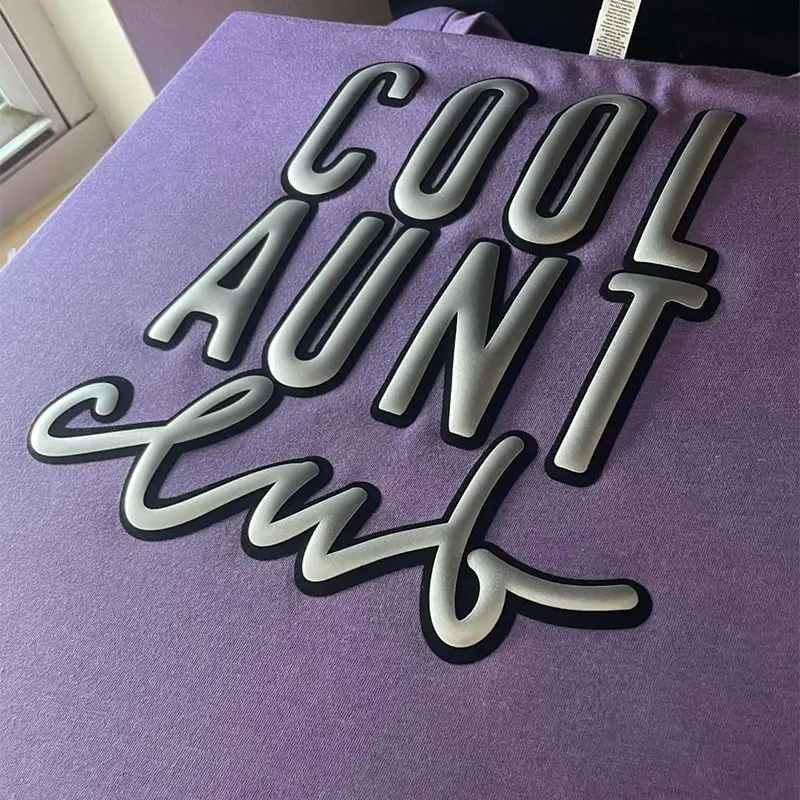
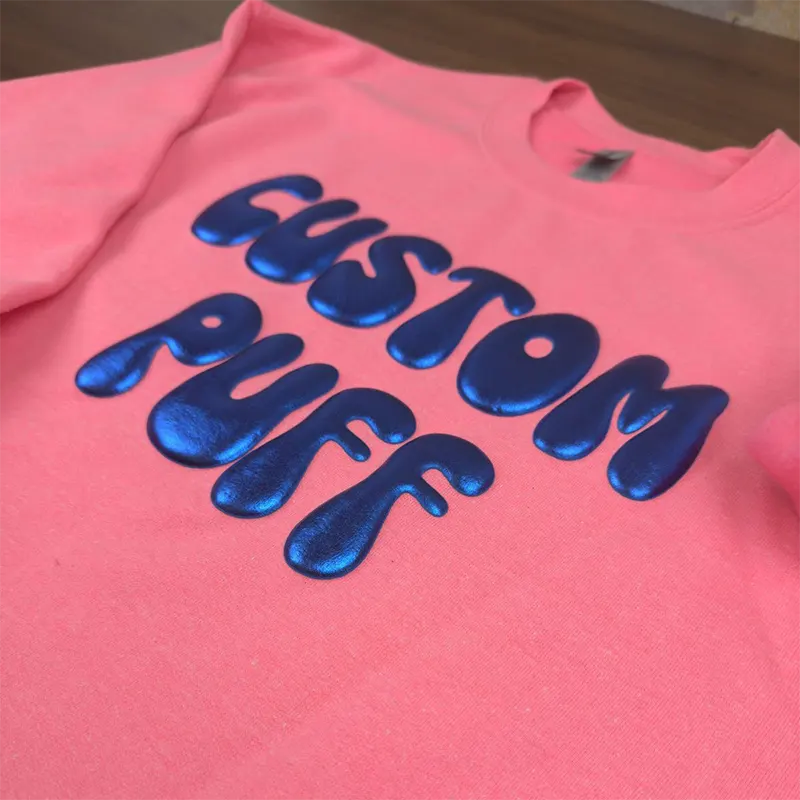
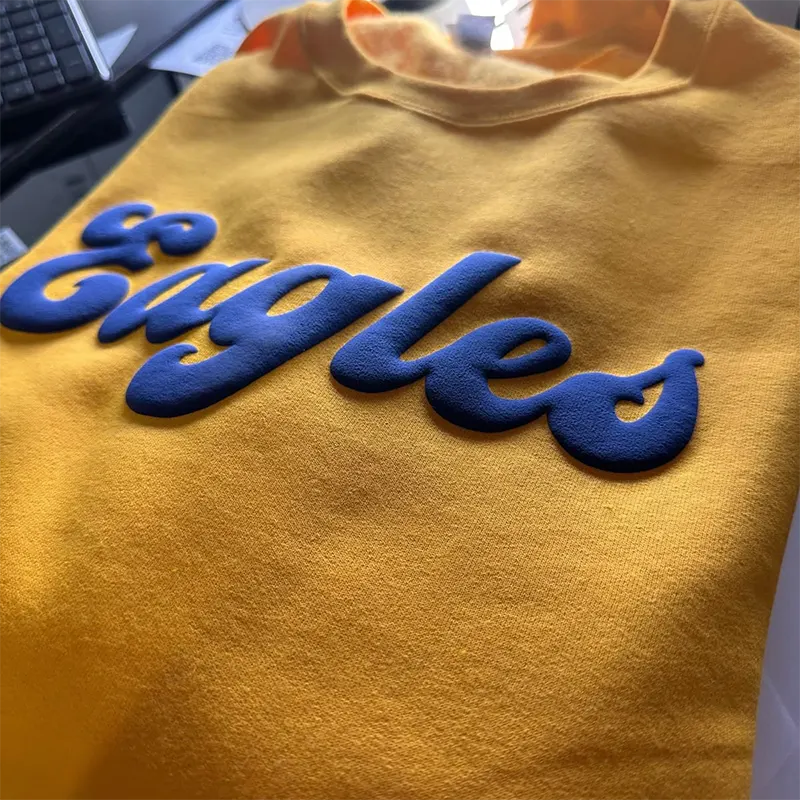
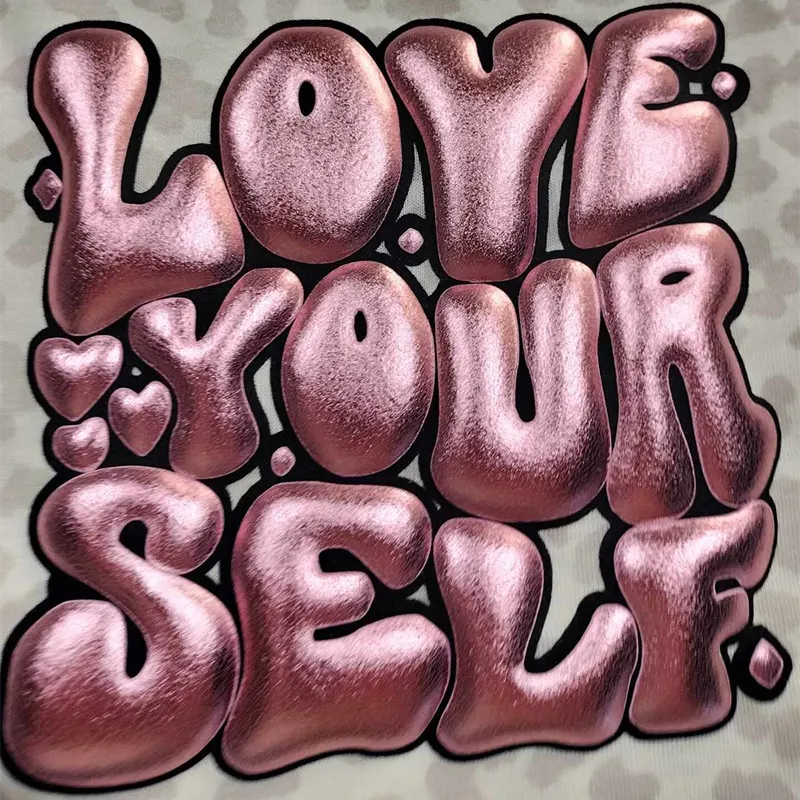
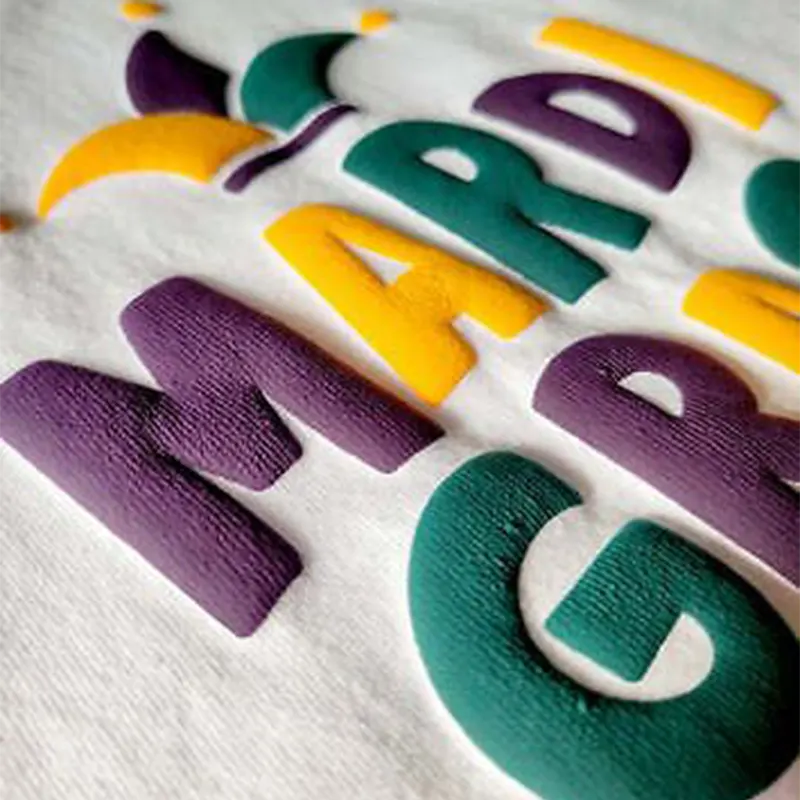
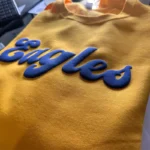
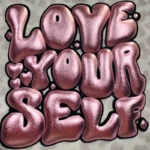
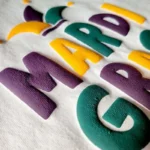
Premium 3d puff printing service on wholesale apparel for custom streetwear, kidswear, gift packaging, and promotional merchandise. Our 3d puff printing process applies high-quality decoration techniques to fabric using factory-controlled production methods, delivering consistent results that meet retail and wholesale buyer standards. OEM factory low MOQ accepted, with full custom design, color matching, and bulk production support for private label brands and print shops worldwide.
What Is 3d Puff Printing on Apparel?
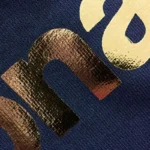
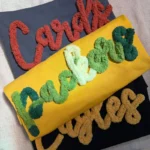
3d Puff Printing is a custom decoration technique used to apply graphics, patterns, or branded elements to apparel and textile products. The result is a durable, color-fast decorative finish suitable for t-shirts, hoodies, sweatshirts, kidswear, caps, tote bags, and promotional merchandise. Our 3d puff printing service supports cotton, polyester, poly-cotton blends, fleece, French terry, and knit fabrics, with consistent results across production batches.
3d Puff Printing Process and Production Workflow
Our 3d puff printing production follows a strict 4-step workflow to ensure consistent quality, fabric integrity, and color fastness. Step 1: fabric preparation and base color inspection. Step 2: production application using factory-controlled equipment. Step 3: heat-cure or setting based on material specification. Step 4: hand-finished quality control with wash testing to confirm durability after 30+ wash cycles, ensuring long-term performance for retail and promotional use.
The 3d puff printing process is fully compatible with our other decoration services, including screen printing, DTF transfer, and embroidery, allowing hybrid finishes on premium custom products.
3d Puff Printing Fabric Compatibility and Applications
3d Puff Printing works on a wide range of apparel fabrics, with optimal results on 100% cotton, 100% polyester, poly-cotton blends, French terry, fleece, and jersey knit. Common applications include kidswear, party t-shirts, festival apparel, dance uniforms, holiday gift packaging, custom streetwear capsules, and limited-edition promotional merchandise. Our OEM factory produces 3d puff printing on blank t-shirts, hoodies, sweatshirts, tank tops, tote bags, and aprons with low MOQ and bulk wholesale pricing.
For wholesale buyers and private label brands, 3d puff printing offers a differentiated decoration finish that elevates standard blank apparel into premium custom products. Combined with our OEM manufacturing capabilities, clients can order custom-decorated apparel at factory-direct wholesale prices with stable lead times and consistent quality across production runs.
3d Puff Printing Color Options and Custom Blends
Our standard 3d puff printing color palette includes a wide range of Pantone-matched shades, with custom color blending available for orders meeting minimum quantity requirements. Each production batch is documented with a Pantone reference for repeat order consistency. Our color management system ensures stable color across multiple production runs.
3d Puff Printing Quality Standards and Wash Durability
Every 3d puff printing order undergoes our factory quality control process: incoming fabric inspection, in-process decoration check, post-cure wash test (30+ cycles), and final hand-finish inspection. Production batches are AQL 2.5 inspected before packing, ensuring wholesale buyers receive consistent premium quality in every shipment.
3d Puff Printing MOQ, Pricing, and Lead Time
3d Puff Printing service is available with low MOQ (factory-direct wholesale pricing), with sample lead time of 7-10 days for custom color development and bulk production lead time of 15-25 days depending on quantity and decoration complexity. Pricing varies by fabric type, decoration area, and order quantity. Contact our sales team for detailed quotation with fabric cost, decoration fee, and shipping estimate to your destination.
Order Custom 3d Puff Printing Apparel
To start a 3d puff printing project, send your design file (AI / PSD / PDF), target fabric, color choice, and order quantity to our sales team. We will prepare a detailed quotation with sample lead time, bulk production schedule, and shipping options. For reference on our decoration quality, view our screen printing service, DTF transfer service, and OEM factory capabilities. Our team responds to all inquiries within one business day with comprehensive pricing and production planning support.
For industry context on textile decoration methods and quality standards, see the Wikipedia article on textile printing techniques and applications.

Reviews
There are no reviews yet.