
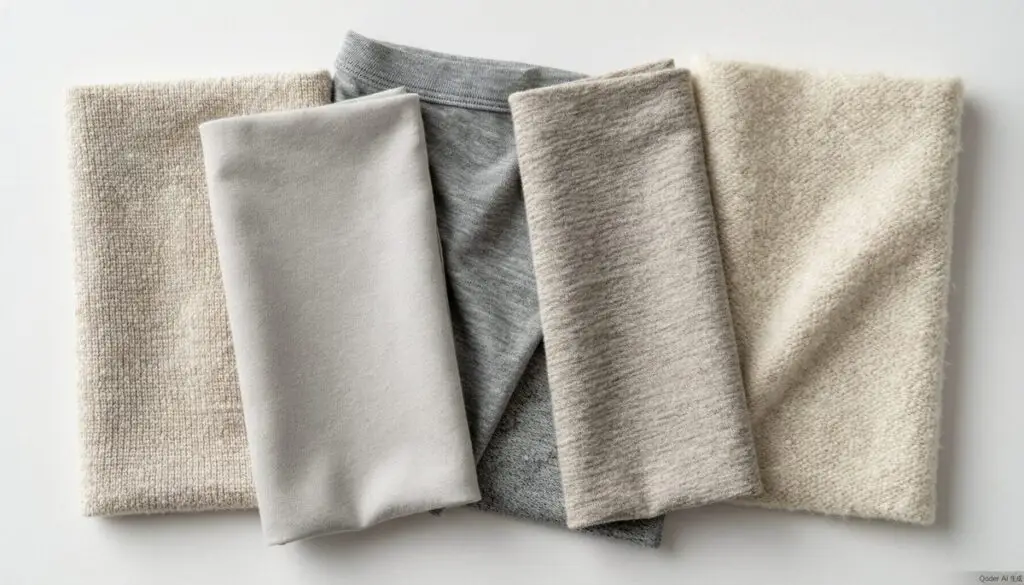
When launching a custom T-shirt line or placing an OEM order, the fabric you choose affects everything: how the shirt feels, how it prints, how it washes, and ultimately whether your customers come back for more. Yet many brands, especially those new to custom apparel, treat fabric as an afterthought. This guide breaks down exactly what you need to know to make the right choice.
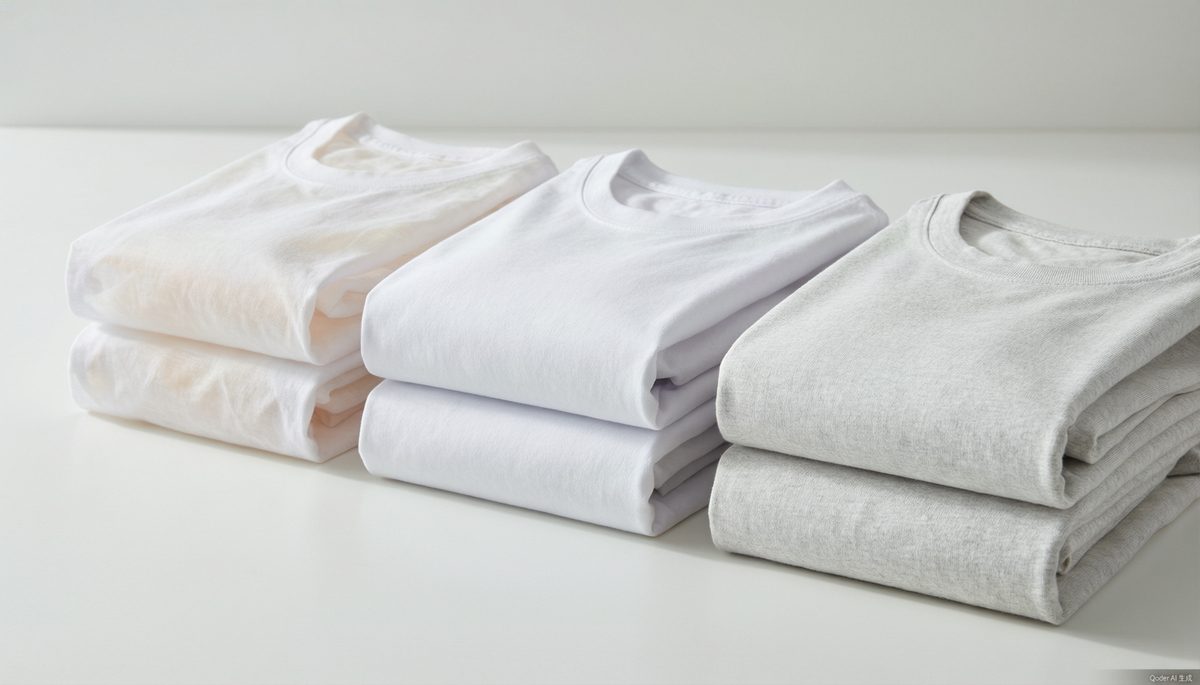
The Most Common T-Shirt Fabrics Explained
Understanding your fabric options starts with knowing the fiber content. Here are the materials you will encounter in 90% of OEM T-shirt production:
100% Cotton
The default choice for custom T-shirts. Cotton is breathable, soft, and takes ink well. But not all cotton is created equal. Carded cotton is the most economical, with shorter fibers that produce a slightly rougher hand feel. Combed cotton goes through an extra step that removes short fibers and impurities, resulting in a smoother, stronger yarn. Ring-spun cotton is spun on ring spindles for an even softer, more durable yarn. Most premium T-shirt brands use combed or ring-spun cotton.
Cotton-Polyester Blends (CVC and TC)
Blending cotton with polyester adds durability, reduces shrinkage, and lowers cost. CVC (Chief Value Cotton) typically contains 60% cotton and 40% polyester, keeping a cotton-dominant feel while gaining polyester’s wrinkle resistance. TC (Terylene/Cotton) reverses the ratio to about 65% polyester and 35% cotton, producing a smoother, cooler fabric that is very popular in workwear and uniforms. For brands balancing quality and price, CVC is often the sweet spot.
Tri-Blends
A tri-blend combines cotton, polyester, and rayon (typically 50/25/25). The result is an incredibly soft, lightweight fabric with a vintage drape that customers love. Tri-blends are popular for premium lifestyle brands but come with trade-offs: higher cost, more complex printing requirements, and greater fabric waste during cutting.
Organic Cotton
GOTS-certified organic cotton is grown without synthetic pesticides or fertilizers. It appeals to eco-conscious brands and commands a 20-40% price premium. If sustainability is part of your brand story, organic cotton with proper certification is worth the investment. Make sure your supplier can provide valid GOTS transaction certificates for each batch.
GSM: The Weight That Defines Feel and Function
GSM (grams per square meter) measures fabric weight and is the single most important spec after fiber content. Here is how GSM ranges translate to real-world use:
- 120-150 GSM: Ultra-lightweight, ideal for promotional events or layering. Thin enough to be slightly see-through in white. Best for short-term use or budget giveaways.
- 160-180 GSM: The standard range for most retail T-shirts. Good balance of opacity, durability, and comfort. This is where most fashion brands operate.
- 190-220 GSM: Mid-weight, premium feel. Holds its shape better, drapes nicely, and feels substantial. Popular for streetwear and quality-focused brands.
- 230-300+ GSM: Heavy-weight. Thick, structured, and very durable. Used for workwear, premium streetwear, and winter-layering pieces.
A common mistake is choosing GSM based on weight alone without considering the end use. A 250 GSM shirt may feel premium in hand, but if your target market is in Southeast Asia or the US South, your customers will find it too hot for everyday wear.
Yarn Count: The Hidden Quality Indicator
Yarn count (measured in English count or Ne) indicates how fine the yarn is. Higher counts mean finer, softer yarn. You will typically see:
- 20s-24s: Standard yarn, slightly coarser feel. Common in budget and promotional T-shirts.
- 30s-32s: Fine yarn, noticeably softer. Used by most mid-range fashion brands.
- 40s and above: Extra-fine yarn, very smooth and silky hand feel. Used for premium and luxury T-shirts.
Yarn count directly affects print quality too. Finer yarns produce a smoother surface, which means sharper print detail and less ink absorption. If your designs feature fine lines or halftones, request fabric samples with at least 30s count yarn.
Fabric Finish and Pre-Shrink
Raw knitted fabric is not ready for garment production. It needs finishing treatments that affect shrinkage, hand feel, and printability:
- Pre-shrinking (compacting): Essential for any quality T-shirt. Reduces residual shrinkage to under 3-5%. Without this, your carefully sized garments will shrink significantly after the first wash.
- Enzyme wash: Removes surface fuzz and gives a cleaner, smoother finish. Adds a slight cost but significantly improves the premium feel.
- Softener treatment: Enhances hand feel. Different softeners produce different effects, from silky to dry-touch. Request multiple hand feel samples before committing.
- Anti-pilling finish: Important for polyester-blend fabrics. Prevents those annoying little fabric balls from forming after repeated washing.
How to Request Fabric Samples From Your OEM Supplier
Never place a bulk order without testing fabric first. Here is what to request from your supplier:
- Fabric swatch cards showing available colors and weights in each quality
- Pre-production samples (PP samples) in your chosen fabric for fit and feel testing
- Wash test reports showing shrinkage, colorfastness, and pilling results
- GSM cut samples (small squares) to verify weight independently
- If possible, visit the factory or request a video call to see the fabric inspection process
A reliable OEM supplier will provide these without hesitation. If a supplier resists or pressures you to skip sampling, that is a red flag. The cost of sampling is negligible compared to the cost of a wrong bulk order.
Quick Decision Framework
Here is a simplified way to think about fabric selection based on your market positioning:
- Budget / Promotional: Carded cotton or TC blend, 150-160 GSM, 20s count
- Mid-range retail: Combed cotton or CVC, 170-190 GSM, 30s count
- Premium / Streetwear: Ring-spun or organic cotton, 200-240 GSM, 32s+ count
- Workwear / Uniforms: CVC or TC blend, 180-200 GSM, with anti-pilling finish
The right fabric choice is not about picking the most expensive option. It is about matching fabric properties to your brand positioning, your customer’s expectations, and your price point. Get samples, test them, and let data, not assumptions, drive your decision.
Sustainable and Emerging Fabric Options
Beyond conventional cotton and polyester, several sustainable alternatives are gaining traction in the OEM market. Understanding these options helps you differentiate your brand in an increasingly eco-conscious marketplace.
Recycled Polyester (rPET)
Made from post-consumer plastic bottles, recycled polyester offers the same performance as virgin polyester with a significantly lower carbon footprint, typically 59% less according to the Textile Exchange. It is GRS-certifiable (Global Recycled Standard), which gives your brand a credible sustainability claim. The fiber is widely used in activewear and outerwear. Most major sportswear brands now offer rPET lines. The cost premium over virgin polyester has narrowed to about 10-15%, making it commercially viable for mid-range brands.
Bamboo and Tencel (Lyocell)
Bamboo viscose and Tencel lyocell are plant-based fibers known for their exceptional softness, natural antibacterial properties, and excellent drape. Tencel is produced from sustainably harvested wood pulp in a closed-loop process where 99% of the solvent is recovered and reused. Bamboo viscose is softer and cooler to the touch, making it popular for premium lifestyle T-shirts and underwear. Both fibers blend well with cotton and command a 25-40% price premium, but the perceived quality justifies the cost for premium positioning.
Hemp and Hemp Blends
Hemp is one of the most sustainable fiber crops, requiring minimal water, no pesticides, and enriching the soil it grows in. Historically coarse, modern processing techniques now produce hemp fabrics soft enough for T-shirts. Hemp-cotton blends (typically 55/45) combine hemp’s durability with cotton’s softness. The fabric develops a desirable vintage texture over time. Hemp is still a niche fiber in OEM production, but consumer demand is growing rapidly, especially in the US and European markets.
How to Verify Fabric Quality From Overseas Suppliers
Ordering fabric from an overseas OEM supplier introduces risk. Here is how experienced brands minimize it:
- Request independent lab test reports: Ask for SGS, Intertek, or Bureau Veritas test reports for shrinkage, colorfastness, pilling, and GSM verification. Do not accept factory-generated reports, which lack independence.
- Order fabric headers (hangers): Before committing to bulk, order actual fabric headers from the supplier’s current stock. This lets you verify hand feel, weight, and color in person before placing a large order.
- Specify fabric standards in your purchase order: Include exact GSM (+/- 5%), shrinkage limits (max 3-5%), colorfastness ratings (minimum grade 4 per ISO 105), and pilling resistance (minimum grade 3-4 per ISO 12945-2). Clear specifications prevent disputes.
- Conduct a pre-production meeting: For orders over 500 pieces, request a video call with the supplier’s fabric team to review your specifications, see their inspection equipment, and confirm their testing protocols. A professional supplier will welcome this.
- Use a third-party inspection service: For your first few orders, hire a third-party inspection company to verify fabric quality before cutting begins. The cost, typically $200-400 per inspection day, is minor compared to the risk of a failed bulk order.
Common Fabric Mistakes New Brands Make
After working with hundreds of brands, we see the same fabric mistakes repeated:
- Choosing fabric based on appearance alone: A fabric that looks great in a swatch may perform very differently after washing, printing, and wearing. Always test a finished garment sample before committing to bulk.
- Ignoring regional climate: A 220 GSM heavyweight T-shirt sells well in Northern Europe but may be too warm for year-round wear in Southern California or Southeast Asia. Match GSM to your target market’s climate.
- Not accounting for fabric shrinkage in sizing: Even pre-shrunk fabric shrinks 3-5%. Your pattern maker must account for this, or your finished garments will be undersized after the first wash.
- Switching suppliers without re-testing: The same fabric specification from two different mills can produce different results. When changing suppliers, always start with a new round of sampling and testing.
Fabric selection is one of the most impactful decisions you will make for your apparel brand. The right fabric enhances your design, satisfies your customers, and builds long-term brand loyalty. Take the time to test thoroughly, specify clearly, and build a transparent relationship with your supplier.
Looking for a reliable OEM partner to help you source the right fabric? Request a quote and our team will guide you through the process from fabric selection to finished garment.
Shop by Fabric Type
Find the perfect fabric for your custom apparel:
- 100% Cotton T-Shirts — 150-300 GSM, combed & ring-spun
- Polyester T-Shirts — Dry-fit, moisture-wicking, 120-200 GSM
- Poly/Cotton Blend T-Shirts — Durable CVC & TC blends
- Workwear & Uniforms — Heavy-duty fabrics for professional use
