
Heavyweight vs Lightweight T-Shirts: How GSM Affects Drape, Durability, and Print Quality
When you source a blank t-shirt, the first specification most buyers look at is fiber content. The second is color. The third is usually GSM — and yet GSM quietly determines almost every other property a brand cares about: how the tee drapes on the body, how it holds up after fifty washes, how it sits under a heat press, how much ink it absorbs, how it packs and ships, and what the customer is willing to pay at retail.
The terms lightweight and heavyweight are used loosely across the industry. A 130 GSM single jersey feels featherweight next to a 240 GSM heavyweight tee, but the line between “light” and “mid” and “heavy” is not standardized. A useful working scale for custom apparel buyers in 2026 is:
- Lightweight: 110–150 GSM
- Mid-weight: 160–190 GSM
- Heavyweight: 200–260 GSM
- Ultra-heavyweight: 270+ GSM (workwear and fashion-only)
This guide is written for brand owners, sourcing managers, and buying teams who need to choose between a lightweight, mid-weight, and heavyweight tee for a specific program. We will walk through how GSM affects drape, durability, opacity, decoration compatibility, climate fit, and pricing, and we will close with a practical decision tree and the most common mistakes buyers make when picking GSM by guess rather than by specification.
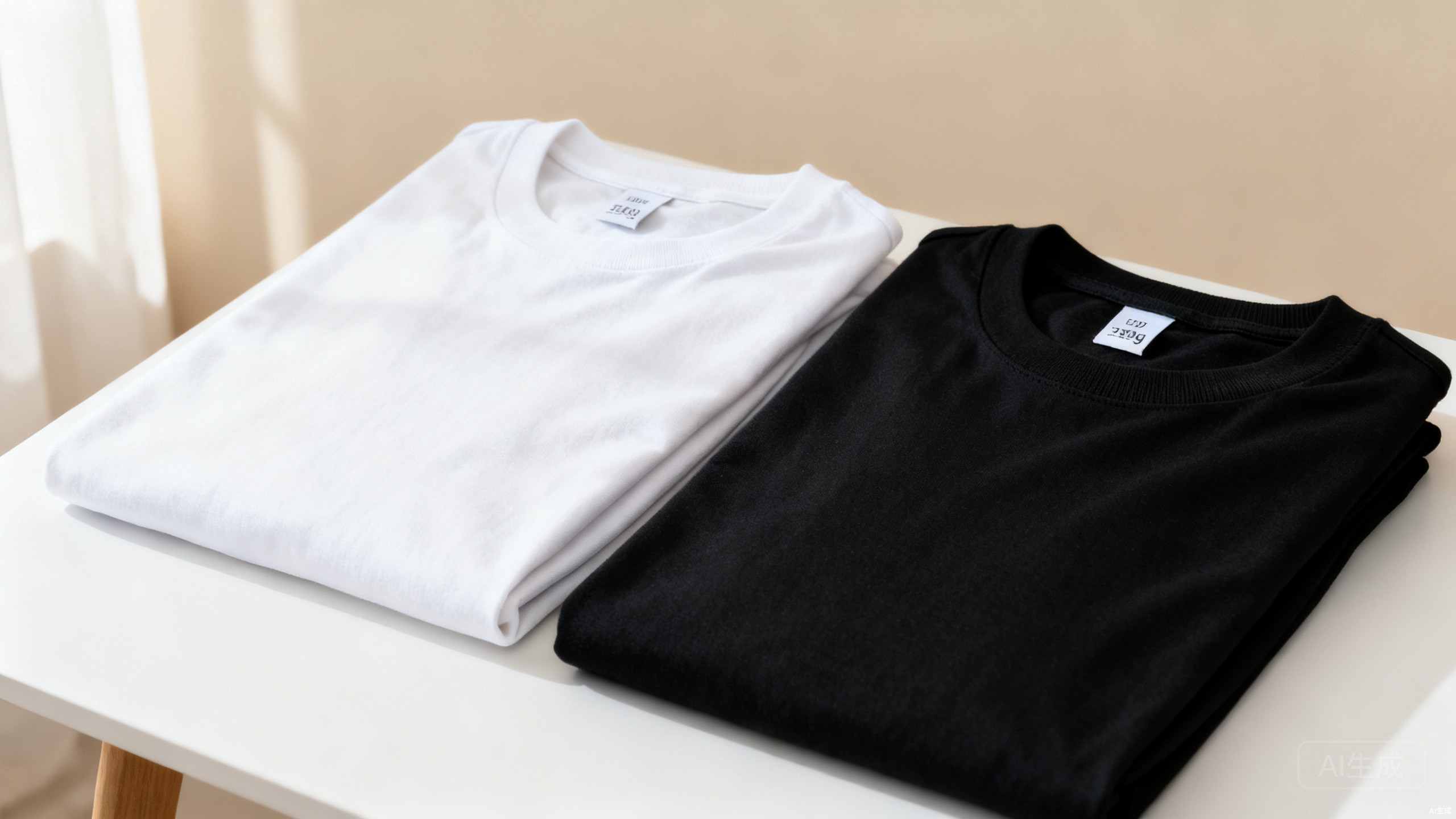
What GSM Actually Measures
GSM stands for grams per square meter — the weight of one square meter of finished, relaxed fabric. It is the universal measure used in knit fabric sourcing, and it correlates closely with thickness, opacity, density, and perceived quality. Two tees cut from the same fabric pattern but at different GSMs will feel like entirely different garments.
To put GSM on a tactile scale: a 130 GSM single jersey is roughly the weight of a typical promotional giveaway tee; a 180 GSM single jersey is the workhorse retail quality weight; a 220 GSM single jersey is the premium heavyweight that holds shape, drapes more vertically, and feels substantial in the hand; a 260 GSM single jersey is closer to a light sweater than a traditional tee.
GSM is not the same as thickness (mm), and not the same as yarn count (Ne or Tex). A loosely knit 220 GSM fabric can be thicker than a tightly knit 200 GSM fabric. A 200 GSM fabric knit from fine 32s yarn will feel smoother than a 200 GSM fabric knit from coarser 20s yarn. GSM measures mass per area, which is a function of yarn count, stitch density, and finishing — three variables that the factory tunes for a target hand-feel.
Lightweight Tees (110–150 GSM)
Lightweight tees are the lowest-cost, lowest-mass blank in the market. They are designed for promotional giveaways, event merchandise, fast-fashion basics, and any application where the buyer prioritizes a low unit cost and a soft initial hand-feel.
Where Lightweight Tees Win
- Promotional giveaways and event merchandise. A 130 GSM tee printed with a one-color logo and shipped in a polybag costs less to produce and less to ship than any heavier alternative. For high-volume events, the savings per piece add up to thousands of dollars across a single program.
- Hot-climate basics. Lightweight knits breathe more than heavier knits at the same fiber content. A 130 GSM single jersey in 100% cotton is comfortable in tropical and summer conditions where a 220 GSM tee would feel clammy.
- Layering pieces. Lightweight tees sit comfortably under a shirt, jacket, or hoodie without adding bulk at the shoulders or chest.
- Fast-fashion basics. Brands that turn collections every 4–8 weeks prioritize a soft initial feel and a low production cost. Lightweight tees meet both.
Where Lightweight Tees Lose
- Opacity. A 130 GSM white tee can be sheer, especially when stretched across the chest or shoulders. Light colors at low GSM are particularly prone to see-through.
- Durability. A lightweight tee thins faster than a heavier tee because there are fewer yarns per square centimeter to begin with. A typical 130 GSM tee will show visible wear after 20–30 wash cycles; a 220 GSM tee will show the same wear after 50–70 cycles.
- Print bleed and distortion. DTG and screen prints on lightweight knits can look pixelated or stretched after a few washes because the underlying fabric flexes more under stress.
- Heat press damage. Lightweight knits scorch and shine more easily under a heat press because the lower mass of fiber cannot absorb and dissipate the heat as quickly. DTF and plastisol transfers work, but the press time and temperature must be tuned down.
- Stitching and seam slippage. Lightweight knits place less yarn under each seam, which can lead to seam slippage (the yarns pulling away from the stitch) on tighter-fitting garments.
- Perceived value at retail. A 130 GSM tee feels cheap in the hand. The customer notices, even if they cannot put a number on it.
Mid-Weight Tees (160–190 GSM)
Mid-weight tees are the workhorse of the custom apparel industry. They are the default GSM at most print shops, the default in retail-quality blank programs, and the default in most corporate uniform catalogs. Most “180 GSM” tees fall right in the sweet spot of mid-weight.
The mid-weight zone balances durability, opacity, hand-feel, and print compatibility in a way that lightweight and heavyweight tees each fail at one side. A 180 GSM single jersey in combed ring-spun cotton is opaque in white, drapes well, prints cleanly under both DTG and screen print, holds embroidery without bottoming out, and ships in a flat-pack polybag without excessive dimensional weight.
Most production programs that do not have a strong reason to go lighter or heavier should default to 180 GSM. It is the lowest-risk choice.
Heavyweight Tees (200–260 GSM)
Heavyweight tees are the premium end of the market. They are the choice of streetwear brands, premium retail labels, music merchandise programs, and any application where the customer expects a substantial hand-feel and is willing to pay for it.
Where Heavyweight Tees Win
- Perceived quality. A 220 GSM tee feels expensive in the hand. The drape is more vertical, the body holds its shape after wear, and the seams sit flatter. Customers recognize this at retail and are willing to pay a premium.
- Durability. A heavier tee uses more yarn per square centimeter, which means more fiber to wear through before the fabric fails. A 220 GSM tee at 50 washes looks closer to new than a 180 GSM tee at 30 washes.
- Opacity. A 220 GSM white tee is fully opaque even under stress. No see-through, no embarrassing moments.
- Print quality. Screen prints on heavy tees sit on a denser ink-cushion of fabric; the print looks sharper and holds up longer. DTG prints on heavyweight cotton absorb more ink into the fiber matrix, producing deeper colors and a softer hand. Embroidery sits cleanly on the heavier loft without bottoming out.
- Heat press tolerance. Heavyweight knits absorb and dissipate heat better than lightweight knits. Heat press damage is rare at 220 GSM and uncommon below 240 GSM.
- Streetwear and fashion programs. Heavy tees are the default fabric in the premium streetwear market — the slightly boxy cut, the substantial drape, and the high-quality hand-feel are all part of the design language.
Where Heavyweight Tees Lose
- Heat and humidity. A 220 GSM tee in July in Singapore feels heavy and clammy. For tropical climates and athletic use, mid-weight or lightweight knits are more comfortable.
- Shipping cost. A 220 GSM tee weighs roughly 60% more than a 130 GSM tee of the same size. For programs that ship internationally, the dimensional weight difference adds up.
- Production cost. More yarn per square meter means a higher blank price (typically 30–60% more than a lightweight equivalent).
- Layering bulk. A heavyweight tee does not layer as cleanly under a shirt or jacket.
- Drape. The vertical drape that makes a heavyweight tee look premium on a tall, slim body can look baggy on a smaller frame.
How GSM Affects Drape
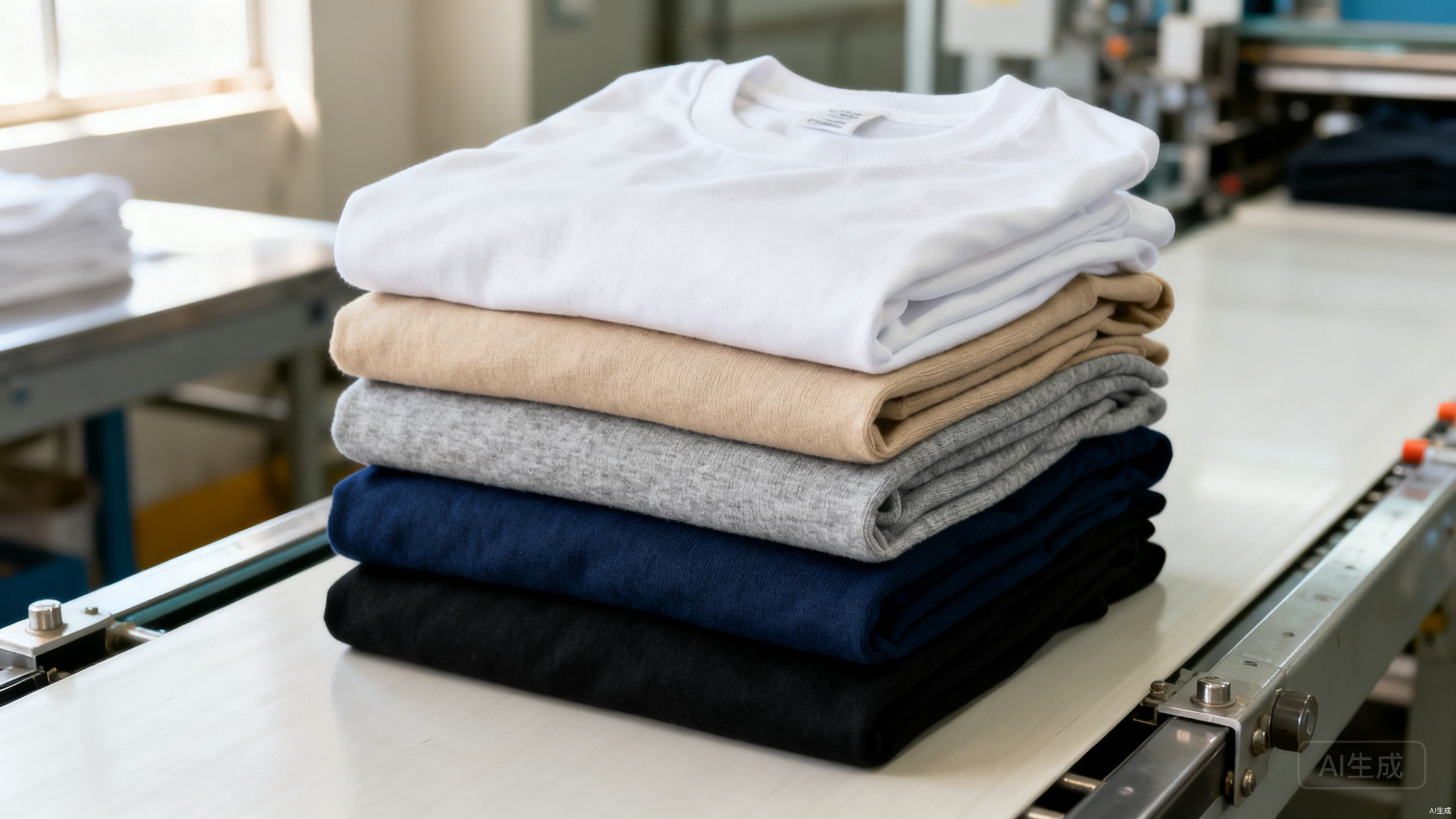
Drape is how a fabric falls under its own weight. A 130 GSM tee drapes softly and conforms to the body; a 220 GSM tee drapes vertically and holds a more architectural shape. The difference is a function of mass per area and stitch density.
For a fitted women’s tee or a fashion-forward silhouette, lightweight and mid-weight knits produce a more flattering drape. For a boxy streetwear cut or a workwear-inspired uniform, heavyweight knits produce the structured drape the design demands.
A useful buyer heuristic: if your customer expects the tee to feel “substantial,” choose 200+ GSM. If they expect the tee to feel “soft and drapey,” choose 150–180 GSM.
How GSM Affects Durability
Durability is the number of wash cycles a garment survives before showing visible wear. Heavier GSMs last longer for three reasons:
- More yarn per square centimeter — there is more fiber to wear through before a hole appears.
- Higher stitch density — the loops are packed tighter, so individual yarn breaks do not propagate as quickly.
- Better recovery after stretching — heavier knits return to shape better than lightweight knits because the higher mass of fiber resists permanent deformation.
A 220 GSM tee will typically survive 50–70 wash cycles before showing visible wear. A 130 GSM tee will typically show visible wear after 20–30 wash cycles. Both numbers are estimates — actual durability depends heavily on yarn count (combed ring-spun vs carded open-end), finishing (mercerized vs not), and dye method (reactive vs pigment).
How GSM Affects Print Quality
Print quality is where the GSM differences show up most clearly in a decoration shop. Different decoration methods respond differently to GSM:
- Screen printing works well at every GSM from 130 to 260. Plastisol inks lay down an even film on all but the most textured knits. The difference is in feel: a print on a 130 GSM tee feels more plasticky because the ink film is a higher percentage of the total fabric thickness. A print on a 220 GSM tee feels integrated with the fabric.
- DTG works best on mid-weight to heavyweight knits. The pre-treatment and white-ink underbase bond more reliably with the denser fiber matrix. DTG on a 130 GSM tee can look washed-out because the ink sits more on the surface than inside the fiber.
- DTF works at every GSM but the hand-feel is stiffer on lightweight knits. The transfer film adds a fixed thickness of adhesive that becomes a larger percentage of the total fabric thickness on a 130 GSM tee.
- Embroidery sits cleanly on 180–240 GSM knits. Below 160 GSM, the embroidery can bottom out (the needle pulls the loops into the surface) and the surrounding fabric can pucker. Above 240 GSM, the embroidery can feel stiff against the body.
- Sublimation requires polyester; GSM matters less than fiber content, but heavier poly knits absorb more dye and produce deeper colors.
How GSM Affects Climate and End-Use
Climate is the single biggest determinant of the right GSM for a program. A buyer sourcing for a tropical retail brand should default to 130–170 GSM. A buyer sourcing for a North American corporate uniform should default to 180–220 GSM. A buyer sourcing for a streetwear label should default to 200–240 GSM.
End-use logic:
- Resort and tropical lifestyle brands → 130–170 GSM cotton or cotton-rich blend.
- Sports and outdoor → 140–170 GSM polyester or poly-rich blend with moisture-wicking finish (lower GSM is better for athletic use because lighter knits dry faster).
- Corporate uniforms and hospitality → 180–210 GSM poly-cotton. Holds embroidery, holds screen print, looks crisp after industrial washing.
- Event merchandise and giveaways → 130–160 GSM cotton or poly-cotton, depending on budget.
- Streetwear and premium fashion → 200–260 GSM cotton, often a 100% combed ring-spun or combed Supima.
- Workwear → 200–240 GSM poly-cotton, often enzyme-washed for a softer hand-feel.
How GSM Affects Pricing
For a 2026 reference, an order of 500 pieces in standard sizes, ex-factory:
| GSM Range | 100% Cotton | 65/35 Poly-Cotton | 100% Polyester |
|---|---|---|---|
| 130–150 (Lightweight) | $2.50 – $3.40 | $2.20 – $3.00 | $2.00 – $2.70 |
| 160–190 (Mid-weight) | $3.20 – $4.20 | $2.80 – $3.60 | $2.50 – $3.20 |
| 200–240 (Heavyweight) | $4.20 – $5.50 | $3.60 – $4.80 | $3.20 – $4.20 |
| 240+ (Ultra-heavyweight) | $5.00 – $7.00 | $4.20 – $6.00 | $3.80 – $5.20 |
These prices assume a Chinese or Southeast Asian factory, mid-grade yarn, basic dyeing, and standard packaging. Premium yarn (combed Supima cotton, ring-spun vs open-end), special finishes (enzyme wash, mercerization), and custom packaging will move prices up 10–30%.
The price premium between mid-weight and heavyweight is roughly 20–35%. The price premium between lightweight and mid-weight is roughly 20–25%. These are noticeable but rarely the deciding factor on their own — the deciding factor is almost always the customer’s expected hand-feel, durability, and end-use.
How GSM Affects Shipping and Packaging
A heavier blank adds to dimensional weight, which affects both domestic and international shipping cost. For a 25-piece carton:
- A 130 GSM tee in standard polybag → 25-piece carton ≈ 4.5 kg
- A 180 GSM tee in standard polybag → 25-piece carton ≈ 6.0 kg
- A 220 GSM tee in standard polybag → 25-piece carton ≈ 7.5 kg
For a 5,000-piece order shipped by ocean freight, the difference between lightweight and heavyweight blanks adds 1.5–2.0 metric tons to the shipment. At $2,000–$3,000 per metric ton for ocean freight, that is $3,000–$6,000 in additional shipping cost on a single production run.
Heavier blanks also take up more warehouse space per piece, which affects inventory carrying cost for brands that stock multiple colorways and sizes.
Common Mistakes When Choosing GSM
- Picking 130 GSM because it is the cheapest. The per-piece savings are usually smaller than the perceived-value loss at retail. Customers notice a thin tee.
- Picking 220 GSM for a tropical program. The customers will be hot and uncomfortable. Mid-weight or lightweight knits are the right call for hot climates.
- Ignoring yarn count. Two tees at the same 180 GSM can feel completely different if one is knit from 20s yarn and the other from 32s yarn. Yarn count controls hand-feel and durability as much as GSM does.
- Confusing GSM with quality. Higher GSM is not always better. A 180 GSM tee knit from combed ring-spun 32s yarn is a better product than a 220 GSM tee knit from carded open-end 20s yarn. Both specifications matter.
- Skipping pre-production samples. A factory’s “180 GSM” can be off by ±10 GSM depending on finishing shrinkage. Always order a pre-production sample and weigh it.
- Ignoring color fastness at higher GSM. Heavier knits absorb more dye, which can produce deeper colors at the same dye load. Always order a dyed sample in the actual production color.
Quick Decision Tree for Your Next Program
- Is the program a promotional giveaway or fast-fashion basic? → 130–150 GSM cotton or poly-cotton.
- Is the program a mid-market retail basic or uniform? → 180 GSM cotton or poly-cotton.
- Is the program a premium retail, streetwear, or fashion-forward label? → 200–240 GSM combed ring-spun cotton.
- Is the program athletic or moisture-wicking? → 140–170 GSM polyester or poly-rich blend (lower GSM, not higher, for athletic use).
- Is the program a tropical climate lifestyle line? → 130–170 GSM cotton.
- Is the program a workwear or uniform program? → 200–220 GSM poly-cotton.
- Is the decoration a single-color screen print on a tight budget? → 160–190 GSM is the safest range.
- Is the decoration a complex DTG or all-over-print design? → 200+ GSM cotton for the best color depth and ink absorption.
Locking the GSM right and yarn count right before sampling keeps the rest of the program on a single coherent spec. It also keeps the cost forecast honest — a 220 GSM tee is a different line item from a 180 GSM tee, and confusing the two is one of the most common sources of margin slip in custom apparel programs.
How to Verify GSM on a Sample
Most factories will report the GSM on the spec sheet, but the finished, relaxed fabric GSM can vary depending on finishing shrinkage. To verify:
- Cut a 10 cm × 10 cm square from the pre-production sample.
- Condition it at 20 °C and 65% relative humidity for 24 hours.
- Weigh the conditioned square on a gram scale.
- Multiply the weight in grams by 100 to get GSM (since 10 cm × 10 cm = 0.01 m², and weight / area = weight × 100 = GSM).
A 0.01 m² square of 180 GSM fabric should weigh 1.80 grams. If the actual weight is 1.65 grams, the actual GSM is 165. A ±5% tolerance is normal; anything more than ±10% is a sign the finishing is not consistent with the spec.
If the actual GSM is consistently lower than the spec across multiple samples, the mill is finishing the fabric too aggressively or using a looser stitch density than promised.
Frequently Asked Questions
What is a good GSM for a t-shirt?
180 GSM is the most versatile GSM for a t-shirt. It balances drape, durability, opacity, print compatibility, and price. Lighter (130–150 GSM) is acceptable for promotional giveaways and tropical programs. Heavier (200–240 GSM) is acceptable for streetwear and premium retail. Anything above 240 GSM starts to feel like a light sweater rather than a tee.
Is 180 GSM good for screen printing?
Yes. 180 GSM is the default GSM for screen printing. Plastisol and water-based inks lay down cleanly on a 180 GSM single jersey, the cure temperature is standard, and the print holds up well after 50+ wash cycles. Lower GSM (130–150) is more prone to ink bleed and distortion under stress. Higher GSM (220+) produces a more integrated feel but the print feels stiffer because the ink film is a smaller percentage of the total thickness.
Is higher GSM better for embroidery?
Not necessarily. Embroidery sits cleanly on 180–220 GSM. Below 160 GSM, the fabric can collapse around the stitches and produce a “bottomed-out” look. Above 240 GSM, the embroidery feels stiff against the body and the fabric can pucker around dense stitch areas. 180–200 GSM is the sweet spot for most logos.
Does GSM affect breathability?
Yes. At the same fiber content, a 130 GSM knit breathes more than a 220 GSM knit because the lower mass of fiber holds less trapped air. For hot, humid climates, lighter knits (130–170 GSM) are more comfortable. For cold climates, heavier knits (200+ GSM) act as light insulation.
How much does GSM affect price?
For a mid-volume production run (500–2,000 pieces), a 220 GSM tee costs roughly 20–35% more than a 180 GSM tee of the same construction and fiber content. A 130 GSM tee costs roughly 20–25% less than a 180 GSM tee. The premium is noticeable but rarely the deciding factor — the deciding factor is almost always the end-use and the customer’s expected hand-feel.
Is 200 GSM too heavy for summer?
Yes, for most climates. A 200 GSM tee in 100% cotton will feel heavy and warm in temperatures above 27 °C (80 °F). For hot summer retail, 130–170 GSM is more comfortable. For shoulder-season (spring/fall) or cool-summer climates, 180–200 GSM is acceptable. For winter layering, 200+ GSM works as a base under a heavier outer layer.
How do I check the GSM of a sample at home?
Cut a 10 cm × 10 cm square from the sample, condition it at room temperature for 24 hours, and weigh it on a kitchen scale that reads to 0.1 grams. Multiply the weight in grams by 100 to get GSM. A 180 GSM fabric should weigh 1.80 grams per 0.01 m² square. A ±5% tolerance is normal; anything more is a flag.
Conclusion
GSM is one of the most important specifications on a t-shirt spec sheet, and one of the most underappreciated by buyers who source by habit rather than by specification. A 130 GSM giveaway tee and a 220 GSM streetwear tee are two completely different products, even when they share the same fiber content and the same color.
Picking the right GSM before sampling — based on end-use, climate, decoration method, and customer willingness to pay — keeps the program on a single coherent specification. It also keeps the cost forecast honest: a 220 GSM tee is a different line item from a 180 GSM tee, and confusing the two is one of the most common sources of margin slip in custom apparel programs.
If you are planning a new program, request a quote with the GSM range, yarn count, fiber content, and decoration method and we will send back a detailed spec sheet and a 500-piece price reference within one business day.
Pages
- OEM Garment Home
- Shop Blank Apparel
- Custom T-Shirts
- Custom Hoodies
- Custom Polo Shirts
- Screen Printing Service
- Embroidery Service
- DTG Printing Service
- DTF Printing Service
- Contact OEM Garment
- About OEM Garment
- Manufacturing Process
- Request a Quote
Product Categories
- 100% Cotton T-Shirts
- Polyester T-Shirts
- Cotton/Polyester Blend T-Shirts
- Hoodies & Sweatshirts
- Polo Shirts
- Tank Tops & Sleeveless
- Long Sleeve T-Shirts
- Performance & Athletic Wear
- Children’s Apparel
- Headwear & Caps
Related Articles
- Pique vs Single Jersey vs Interlock: How to Choose the Right Knit Fabric
- Cotton vs Polyester T-Shirts: Which Fabric Is Better for Custom Apparel?
- Ring-Spun Cotton vs Regular Cotton: Which Is Better for T-Shirts?
