The Short Answer
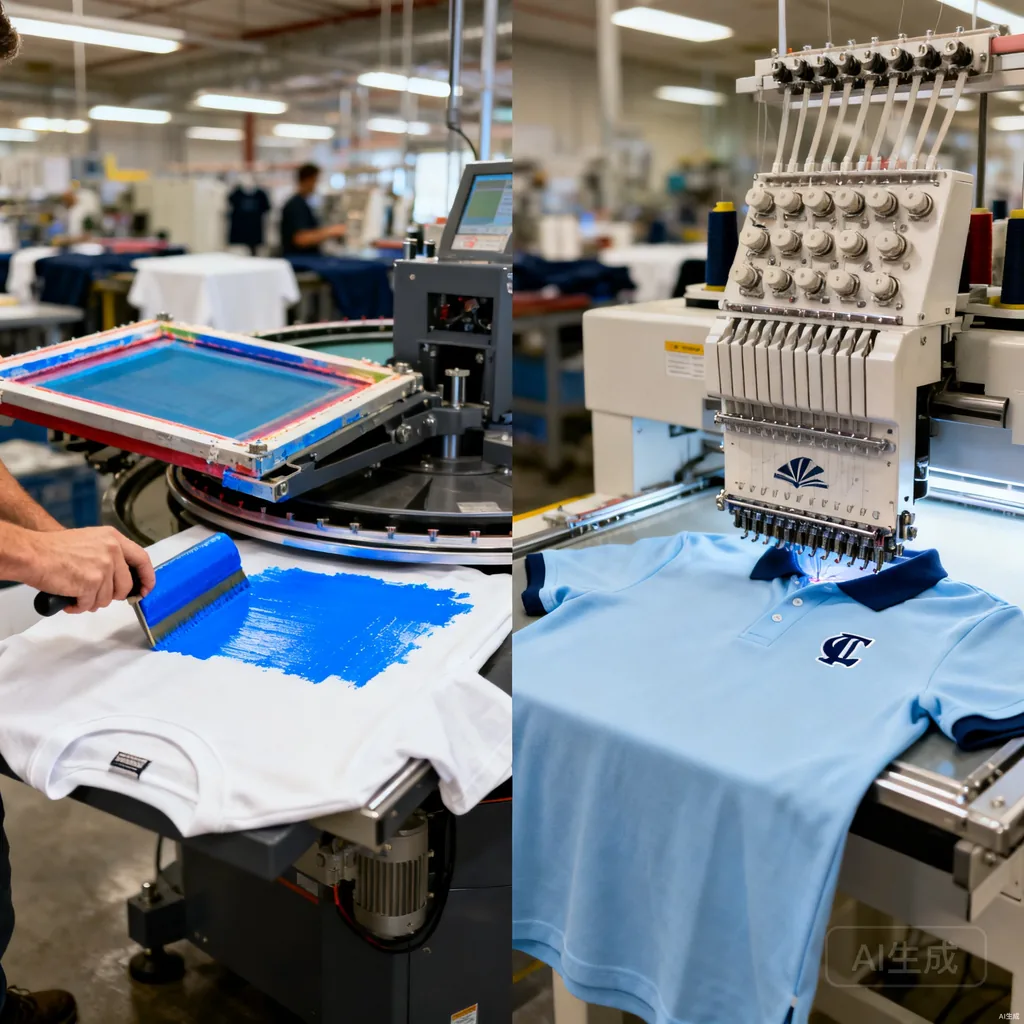
Both methods decorate garments with your logo — but they produce completely different results. Screen printing prints your design onto fabric using ink, giving you bold colors, soft hand feel, and the lowest cost per piece at volume. Embroidery stitches your design into the garment with thread, giving you a raised, textured, premium finish that outlasts the garment itself.
The fastest way to decide:
- Choose screen printing for t-shirts, colorful or photographic designs, large print areas, and price-sensitive bulk orders.
- Choose embroidery for polos, caps, workwear, corporate uniforms, small logo placements, and a premium brand image.
- Use both when a garment needs a large printed graphic plus a small embroidered logo — common for streetwear and corporate programs.
We produce both methods in-house at our Yiwu factory, so this comparison reflects what we actually see customers order — not marketing theory. If you want the full picture across all five major methods, see our complete printing method comparison guide.
How Each Method Works
Screen Printing
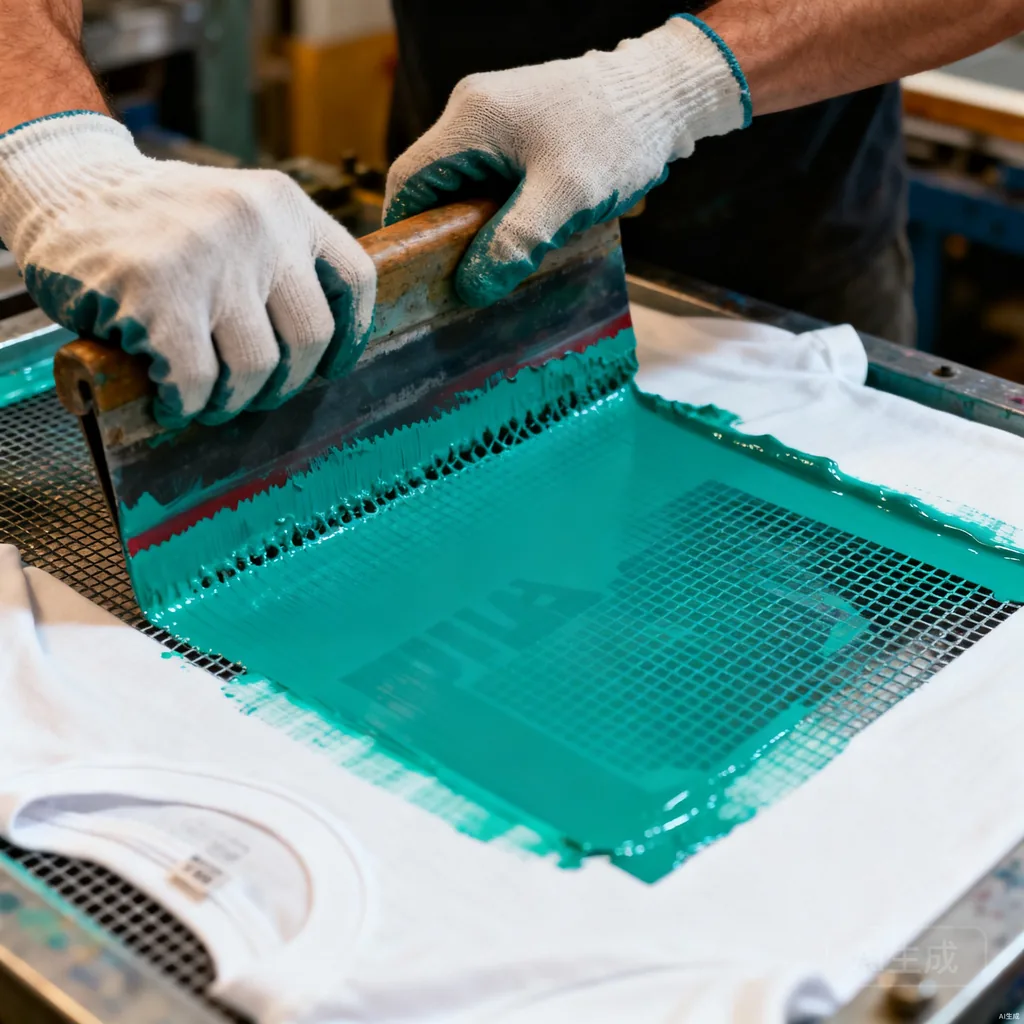
Screen printing pushes ink through a fine mesh stencil onto the fabric. Each color in your design requires its own screen, so a 3-color logo needs 3 screens. After printing, the garment passes through a dryer that cures the ink into the fibers.
Our 12-station carousel allows up to 12 colors per design, with special effects available such as puff printing, metallic inks, and discharge printing for a vintage look. Setup (making screens) is a one-time cost per design, which is why price per piece drops sharply as quantity rises.
Embroidery
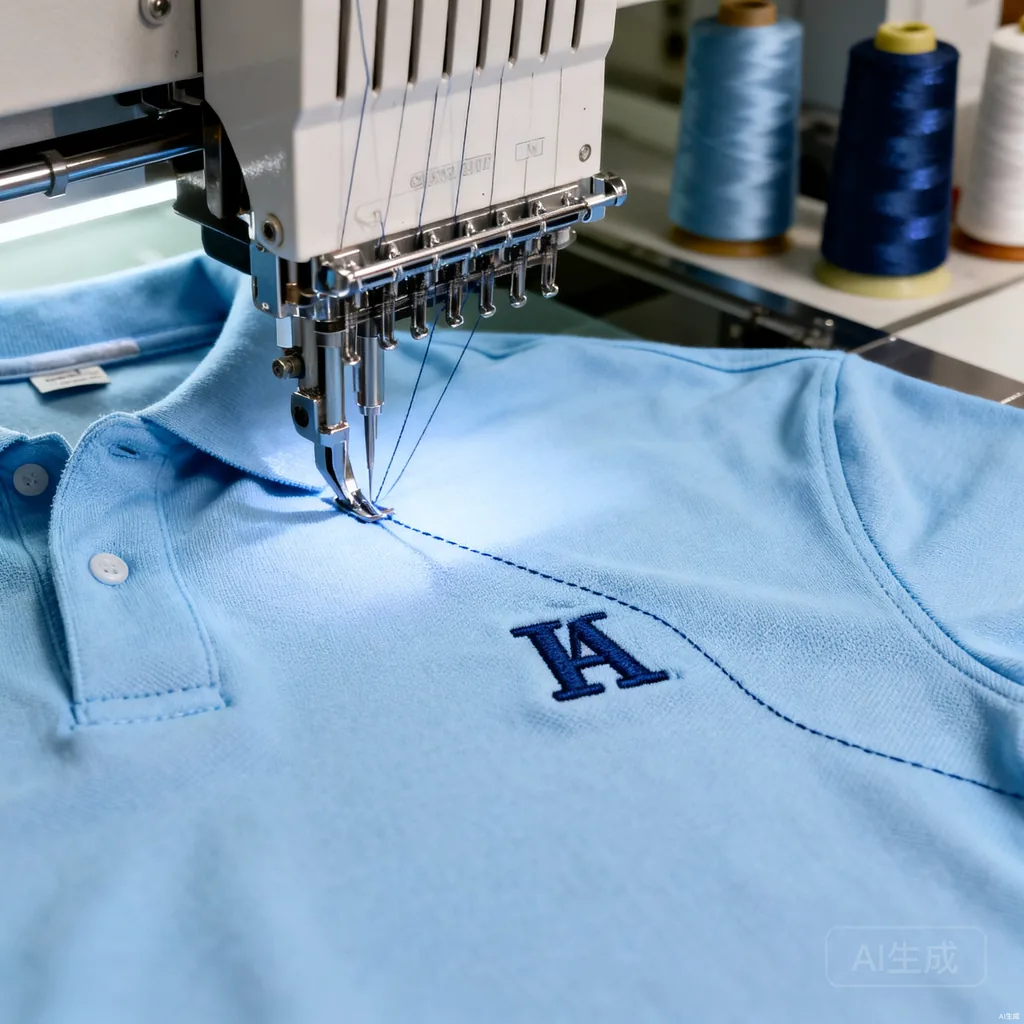
Embroidery converts your logo into a digital stitch file — a process called digitizing — and then stitches it directly onto the garment with colored thread. Our 8-head Tajima machines run the same design across multiple garments simultaneously.
Unlike printing, embroidery has no per-color cost. A 6-color logo costs the same to stitch as a 1-color logo — what matters is stitch count, the total number of stitches the design requires. Larger and denser designs cost more because they take longer to stitch.
Side-by-Side Comparison
| Factor | Screen Printing | Embroidery |
|---|---|---|
| Best for | T-shirts, colorful graphics, large designs | Polos, caps, workwear, corporate logos |
| Colors | Up to 12; each color adds cost | Unlimited; no per-color charge |
| Design size | Large prints (full front OK) | Small to medium (3–4 in typical) |
| Detail level | Fine halftones and gradients | Clean lines; tiny text is hard |
| Texture | Flat, soft, flexible | Raised, dimensional, premium |
| Durability | 50+ washes with proper care | Outlasts the garment |
| Setup | Screens per design/color | One-time digitizing fee |
| Fabric fit | T-shirts, hoodies, most knit fabrics | Pique, fleece, caps, jackets, thick fabrics |
| Volume pricing | Excellent — drops fast | Moderate — based on stitch count |
Durability: Which Method Lasts Longer?
Embroidery wins on raw durability. Thread stitched into fabric cannot crack, peel, or fade the way ink eventually can. A well-digitized embroidery still looks sharp after 100+ washes — usually long after the garment itself is worn out. That is why it remains the standard for workwear and uniforms that are washed daily.
Modern screen printing is still highly durable — 50+ wash cycles is our standard test benchmark for prints on cotton garments. The keys are correct ink selection for the fabric and a full cure in the dryer. Prints on cotton hold up better than prints on slippery synthetic blends, which is why we test wash durability on every new fabric before bulk production.
One caveat for embroidery: very lightweight fabrics (such as 130–160 GSM thin tees) can pucker or distort under dense stitching, because the thread pulls on the fabric. On heavy knits, fleece, and pique, embroidery sits perfectly flat.
Cost and MOQ: What You’ll Actually Pay
Our minimum order quantity is 25 pieces per style for both methods, so MOQ rarely decides the question — cost structure does.
Screen printing pricing = one-time screen setup per design + a low per-piece print cost. The more pieces you print, the cheaper each one gets. Adding colors increases both the setup cost and the per-piece run cost.
Embroidery pricing = a one-time digitizing fee (converting your logo to stitches) + a per-piece stitching cost driven by stitch count. A small left-chest logo might run 5,000–8,000 stitches; a full back design can exceed 50,000. More colors cost nothing extra — more stitches cost more.
Practical takeaway: for a one-color logo on 500 t-shirts, screen printing will almost always be cheaper. For a multi-color small logo on 50 polos, embroidery is frequently cheaper than multi-color screen printing — and looks more premium. Send both options into a quote request and we will price each method so you can compare on real numbers.
Design Capabilities: Detail, Color, and Size
Photographic and Gradient Art
Gradients, shading, and photographic images belong to printing. Thread cannot reproduce smooth tonal transitions — designs with fine gradients should be printed or simplified into solid color blocks before digitizing.
Tiny Text
Embroidery struggles with text under roughly 4–5 mm in height; fine serif fonts close up into unreadable thread. Screen printing reproduces small text cleanly, especially with a sharp 1-color design.
Design Size
Screen printing comfortably covers full fronts and oversized streetwear graphics. Embroidery is normally capped at small and medium placements — left chest, sleeve, cap front — because large stitched areas become stiff, heavy, and expensive.
Special Effects
Screen printing offers puff printing, metallic inks, glow-in-the-dark, and discharge effects. Embroidery offers 3D puff stitching (classic on caps), chenille, and metallic thread. Both methods have premium options — they just express them differently.
Best Garments for Each Method
T-Shirts
Screen printing is the default for cotton tees. It is fast, economical, and produces vivid full-coverage graphics. A small embroidered logo on a heavyweight tee also looks great for premium streetwear — see our heavyweight t-shirt collection for fabrics that carry embroidery well.
Polos
Embroidery is the classic choice for polo shirts — the textured pique fabric is made for stitched logos, and an embroidered chest logo reads as corporate and professional. Screen printing on pique is possible but the knit texture shows through the ink. Most polo shirt orders we produce use embroidery.
Hoodies and Sweatshirts
Both work. Fleece holds large embroidered designs beautifully, and an embroidered hoodie logo signals premium quality — see our custom hoodie options. Big graphics usually go to screen printing for cost reasons.
Caps and Hats
Embroidery only. Curved cap panels cannot pass flat through a screen printing press, so caps are always decorated with stitched logos — 3D puff embroidery on cap fronts is the streetwear standard.
Workwear and Corporate Uniforms
Embroidery dominates company shirts and workwear programs because it survives industrial laundering and daily wear. Many corporate programs combine both: embroidered logo for identity, screen printed text for job roles or events.
How to Choose: 5 Questions to Ask
- What garment is it going on? Pique, fleece, caps, and jackets favor embroidery; cotton tees favor printing.
- How many colors and what level of detail? Photographic or highly detailed art must be printed; simple bold logos work for both.
- What image do you want to project? Embroidery reads premium and professional; printing reads bold and expressive.
- How large is the design? Large placements go to printing; small logos go to embroidery.
- How will the garment be used? Daily industrial washing demands embroidery; typical retail wear is fine for both.
Both methods run in-house at our factory, and you can explore every option on our apparel decoration techniques overview.
Hybrid Decoration: When to Use Both
Many of our best-selling programs combine the two methods on the same garment:
- Streetwear: large screen printed back graphic + small embroidered chest logo.
- Corporate: embroidered company logo on the chest + screen printed event branding on the sleeve.
- Premium caps and tees: 3D puff embroidered logo + printed slogan.
Hybrid decoration costs more than a single method, but it creates a layered, high-end look that neither method achieves alone. Sampling takes 5–7 days so you can test a hybrid design before committing to bulk.
Frequently Asked Questions
Which is more expensive, screen printing or embroidery?
It depends on the design. Screen printing gets cheaper with volume but costs more per color; embroidery pricing depends on stitch count, not colors. A small multicolor logo on a modest quantity is often cheaper embroidered, while a simple one-color design on hundreds of tees is always cheaper screen printed.
Can embroidery be done on any fabric?
Most fabrics above roughly 180 GSM handle embroidery well, including pique, fleece, and heavy cotton. Very lightweight or stretchy fabrics may pucker; for those, printing is the safer choice. Our team reviews every design and fabric combination before production.
Does embroidery fade after washing?
Quality polyester and rayon embroidery thread is colorfast and resists fading for the life of the garment. Wash embroidered items inside out and avoid bleach to keep stitching looking new.
How many colors can embroidery use?
There is no practical color limit — we stock hundreds of thread shades and can match Pantone references. Additional colors do not add cost, unlike screen printing.
Can I mix screen printing and embroidery in one order?
Yes. We regularly produce hybrid garments that combine a printed graphic with an embroidered logo. Both processes happen in the same factory, so lead times stay within the standard 15–20 day bulk production window.
Get Expert Help With Your Decoration Decision
The fastest way to settle the screen printing vs embroidery question is to see both on your actual garment. Send us your logo and target garment — we will produce decoration samples of each method so you can compare texture, color, and finish side by side.
Request a free quote with both decoration options priced, or contact our team to discuss your project. Sampling takes 5–7 days, bulk production runs 15–20 working days, and every order ships with our 3-stage quality control inspection.
