Choosing between custom t-shirts and custom hoodies is one of the first big decisions every apparel brand faces. Both blanks can carry your logo, both are made in the same factory, and both are produced at scale by your OEM partner. Yet they deliver very different results in terms of cost, customer perception, decoration technique, and seasonality. Get the mix wrong and you can burn through your launch budget on inventory that does not sell. Get it right and you build a wardrobe that customers reorder from year after year.
This guide walks you through the seven factors that actually drive the t-shirt vs hoodie decision: material and weight, unit cost, decoration options, ideal use cases, climate and season, brand positioning, and minimum order quantities. By the end, you will know exactly which blank to launch with, and when to add the other to your collection. If you are still scoping your first production run, start by requesting fabric swatches of both so your team can feel the difference side by side.
Material and Fabric Differences
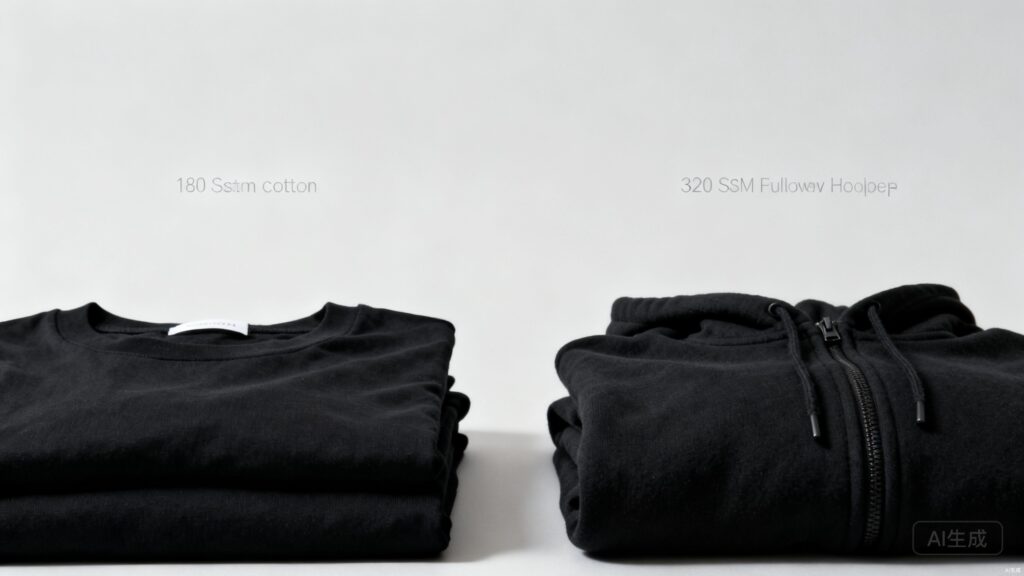
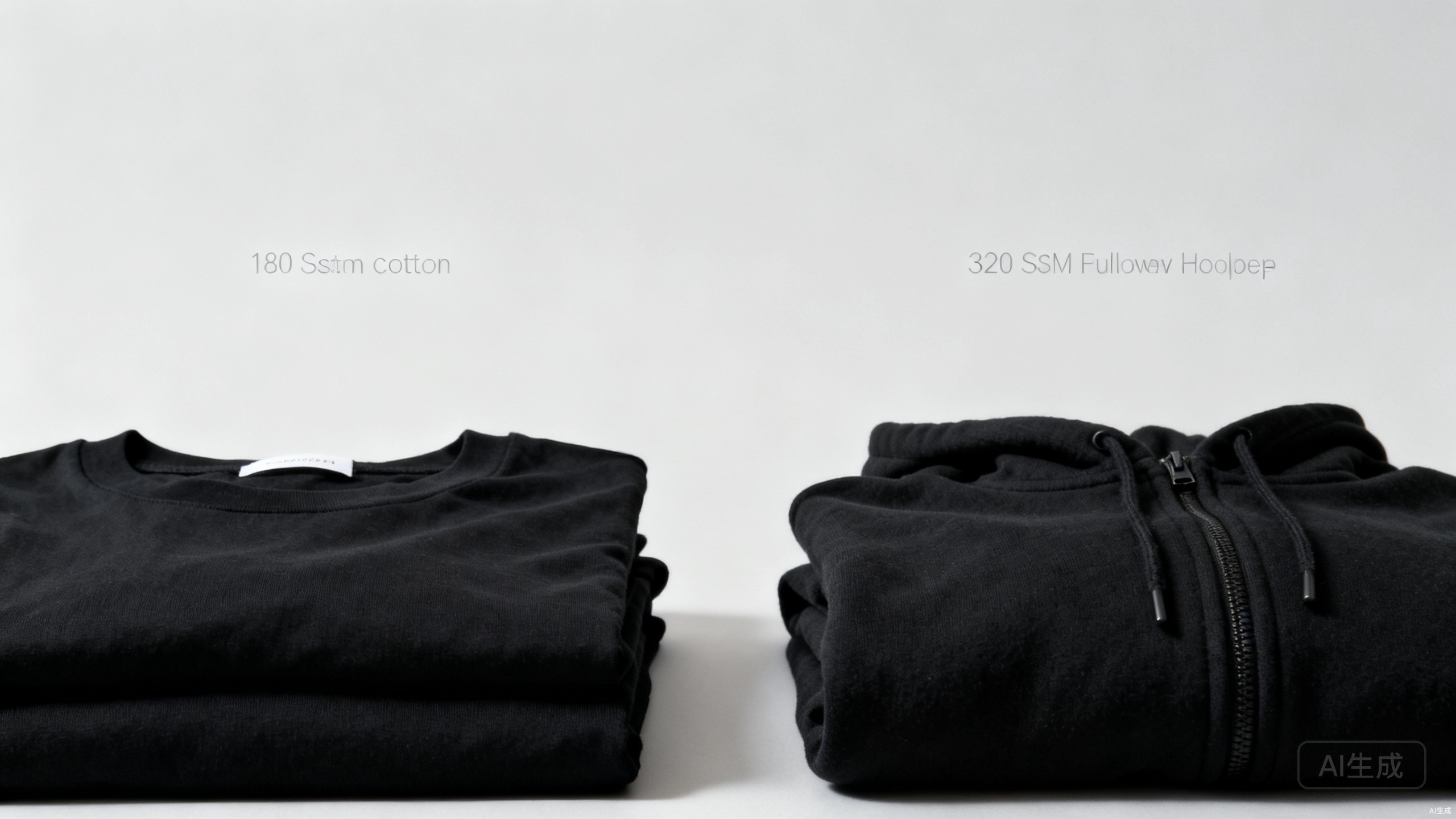
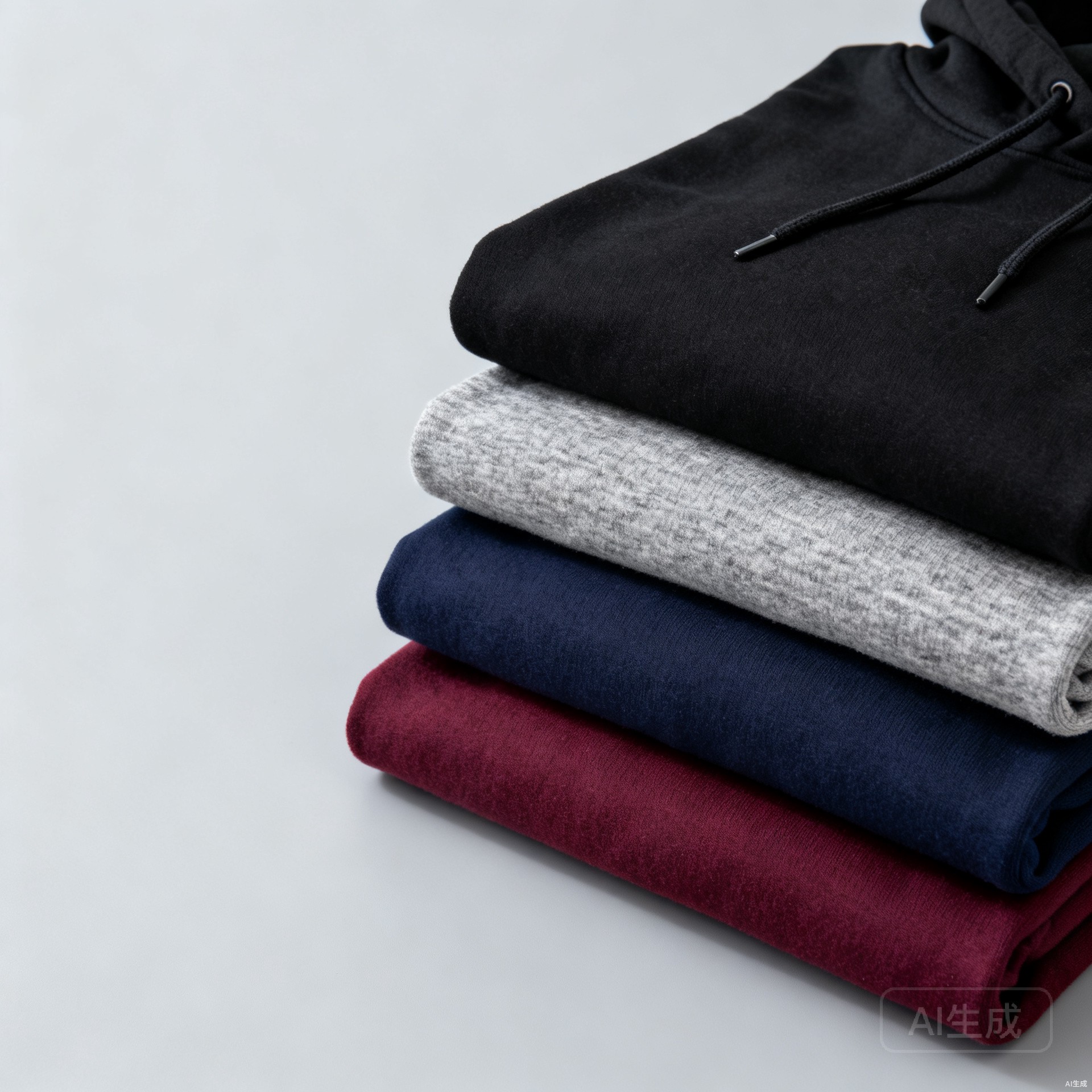
The single biggest difference between a t-shirt and a hoodie is fabric weight. A standard custom t-shirt runs 180 to 220 GSM (grams per square meter) of single-jersey knit, mostly cotton or a cotton-poly blend. A standard custom hoodie runs 280 to 400 GSM of fleece or French terry, almost always brushed on the inside for warmth. That weight difference shows up in three ways: drape, opacity, and shipping volume. A 200 GSM tee drapes cleanly over the body, while a 320 GSM hoodie holds its shape and feels substantial. A heavy hoodie is also fully opaque, so white prints on dark hoodies do not show the fabric through.
For fabric composition, t-shirts are typically 100% cotton, 100% polyester (athletic), or a poly-cotton blend. Hoodies are usually 100% cotton fleece, cotton-poly fleece (80/20 is common), or 100% polyester (athletic). At OEM T-Shirts, the most popular hoodie blank is 80% cotton, 20% polyester, 320 GSM, with a brushed fleece interior. This composition balances softness, durability, and shrink resistance, and it accepts screen printing, embroidery, and DTG equally well.
Production Cost Comparison
At the same order quantity, a hoodie costs roughly 2.5 to 3.5 times more than a t-shirt in production. The reason is simple: hoodies use two to three times more fabric, plus extras like a hood, drawcords, a kangaroo pocket, and heavier ribbing at the cuffs and hem. For a 500-piece order, a custom t-shirt blanks around $4.50 to $6.50 per unit, while a custom hoodie blanks around $11 to $18 per unit. Add decoration, packaging, and shipping, and the total landed cost gap stays close to 3x.
What changes the math is retail pricing. Customers perceive hoodies as a higher-value item and will pay $45 to $85 for a quality custom hoodie, while $22 to $32 is the typical custom tee price range. So the per-unit margin on a hoodie is often larger in absolute dollars, even though the percentage margin can be similar. For brands with limited launch capital, t-shirts are the right starting point because they free up cash for marketing and repeat inventory. For brands with proven demand and a premium positioning, hoodies deliver stronger unit economics from the start.
Decoration Techniques That Work Best
Both blanks accept every major decoration method, but each technique performs differently on the two fabrics. Screen printing is the workhorse for t-shirts and produces crisp, vibrant prints at low per-unit cost for runs of 50 or more. It also works on hoodies, though the thicker fabric means slightly less detail in fine lines. DTG (Direct-to-Garment) is ideal for complex multi-color designs on cotton tees, but on fleece hoodies the print sits more on the surface and can crack if the hoodie is heavily brushed.
For hoodies specifically, embroidery is the most popular decoration method because it sits cleanly on the chest or hood and signals premium quality. Embroidery is also more durable than any print on heavy fleece. DTF (Direct-to-Film) transfers have become a strong third option, especially for small runs and detailed logos, because they adhere well to textured fleece. The right decoration choice depends on your design, your budget, and the substrate. Our quality control team tests every decoration on every blank before approving it for production.
When to Choose Custom T-Shirts
Custom t-shirts are the right primary blank when your customer is buying for warm weather, fitness, casual everyday wear, or budget-conscious gifting. T-shirts also dominate event and promotional apparel because they are inexpensive enough to give away, light enough to ship worldwide at low cost, and versatile enough to design in any style. If your brand is a streetwear label targeting 18 to 30 year olds, a concert merchandise line, a sports tournament organizer, or a corporate gifting program, t-shirts should be the foundation of your collection.
T-shirts are also the smarter choice for your very first production run because the lower unit cost means you can sample more designs, more colors, and more fits without exhausting your budget. Many successful apparel brands launched with tees and added hoodies only after they had proven which designs actually sell. The lesson is the same one every t-shirt sourcing guide teaches: validate with a lower-risk blank before committing capital to a higher-cost one.
When to Choose Custom Hoodies
Custom hoodies are the right primary blank when your customer is buying for cooler weather, layering, premium gifting, team uniforms, or as a year-round staple in a cool climate. Hoodies also work better for corporate uniforms in offices with air conditioning, for outdoor event staff, and for athletic and streetwear brands where the customer expects a heavier garment. If your brand is a tech startup, a creator merchandise line, a college bookstore, or a premium direct-to-consumer label, hoodies can carry the line on their own.
Hoodies also signal a higher tier of brand positioning. The customer who buys a $55 custom hoodie expects premium construction, clean embroidery, and a packaging experience to match. Meeting those expectations is a different operational challenge than shipping $25 tees, and the per-unit economics need to support a marketing budget that can actually drive that customer. For brands that have already proven product-market fit with tees, adding a hoodie is a natural upgrade that lifts both average order value and customer lifetime value.
Seasonality and Climate Considerations
Geography and season matter more than most brands realize when deciding between tees and hoodies. In warm-climate markets (Southern US, Australia, Southeast Asia, the Middle East, Mediterranean Europe), tees dominate year-round and hoodies are a winter-only or evening-only item. In cold-climate markets (Northern US, Canada, Northern Europe, the UK), hoodies are the volume seller for 8 to 10 months of the year, with tees as the summer complement. In temperate markets, both are equally viable and the smart move is to carry both in your collection.
The production process is the same year-round, so seasonality is really a demand-planning question, not a manufacturing question. If you know your peak hoodie season is October through December, plan your production to ship by mid-September so the inventory lands in your warehouse in time for the holiday rush. Missing that window means selling out at full price in November and discounting in January, which is the worst possible margin outcome.
Brand Perception and Customer Psychology
What your customer wears says something about what your brand stands for. A custom tee reads as casual, accessible, and mass-market. It is the right signal if your brand is built on inclusivity, everyday use, and a low price point. A custom hoodie reads as premium, considered, and high-value. It is the right signal if your brand is built on quality, craft, and a closer customer relationship. The biggest mistake new brands make is launching with the blank that does not match the brand story they are trying to tell.
Think about the brands you admire. A surf brand that launches with hoodies only would feel out of place. A luxury streetwear label that launches with tees only would feel under-positioned. The blank you choose is part of the brand. Customer psychology also rewards consistency: if your hoodie and your tee feel like part of the same family (matching fabric weight, matching color palette, matching decoration), customers are more likely to buy both. Plan your collection as a system, not as separate SKUs.

MOQ and Production Lead Times
Minimum order quantities for custom t-shirts at OEM T-Shirts start at 50 pieces per style per color, with 100 pieces per style being the most common entry point for new brands. For custom hoodies, MOQ starts at 100 pieces per style per color because the heavier fabric and additional components require longer setup times on the production line. Lead times are similar for both: 7 to 10 days for sampling, 25 to 35 days for bulk production after sample approval, plus 25 to 40 days for sea freight shipping to most destinations.
If you are testing a new design or a new market, start with tees at the lower MOQ to keep risk small. If the design proves out, you can add the hoodie in the next production cycle. This staged approach also helps you build a continuous relationship with your factory, which translates into better pricing and priority scheduling as your order volume grows. We have helped hundreds of brands follow this exact path, from a 50-piece tee sample to a 5,000-piece hoodie drop.
Combining Both in Your Collection
The strongest apparel brands do not pick between tees and hoodies. They run both as a coordinated collection with a shared color palette, a shared design language, and a shared decoration approach. A typical collection might offer 4 tee colors and 4 matching hoodie colors, with the same logo placement, the same print method, and the same fabric hand-feel across the two products. Customers can buy the tee for warm days and the hoodie for cool evenings, and the two pieces feel like part of the same brand.
Running both does not mean doubling your inventory risk. You can launch with 200 tees and 100 hoodies in your top two colors, then reorder based on actual sell-through. The reorder cycle for hoodies is slightly longer because of the heavier fabric, so plan to keep a 60 to 90 day safety stock on your best-selling hoodie SKUs. If you are ready to plan a collection like this, the easiest next step is to request a detailed quote with your target quantities and we will map out production timing and pricing for both blanks.
Frequently Asked Questions
Is it cheaper to start with t-shirts or hoodies?
It is cheaper to start with t-shirts. A 200-piece tee order typically runs $1,500 to $2,500 in production, while the same 200-piece hoodie order runs $3,500 to $5,500. Starting with tees lets you sample more designs and validate demand before committing capital to the higher-cost blank.
Which decoration method works on both t-shirts and hoodies?
Screen printing, DTG, DTF, and embroidery all work on both blanks. Screen printing is most cost-effective for large runs of simple designs. DTG is best for detailed multi-color artwork on cotton. DTF is the best choice for small runs and complex logos. Embroidery signals premium quality and is especially popular on hoodies.
What is the best fabric for a custom hoodie?
An 80% cotton, 20% polyester fleece at 320 GSM with a brushed interior is the most popular choice. This composition balances softness, warmth, durability, and shrink resistance, and it accepts every common decoration method. For athletic or performance hoodies, 100% polyester fleece at 280 to 320 GSM is the right choice.
Can I order t-shirts and hoodies in the same production run?
Yes, you can combine tees and hoodies in one production cycle, which is a popular approach for brands launching a coordinated collection. Each style has its own MOQ (50 pieces for tees, 100 pieces for hoodies), but they share the same decoration setup, the same production slot, and the same shipping window, which saves time and cost compared to running them as two separate orders.
Conclusion
Both custom t-shirts and custom hoodies are proven winners for branded apparel, and the right choice depends on your customer, your climate, and your brand positioning. Start with t-shirts if you are validating a new brand or a new design. Choose hoodies if you are building a premium line or serving a cold-climate market. Run both if you have the demand to support a full collection. The most important step is to request fabric swatches and a custom quote from a manufacturer you trust, so your decision is grounded in real materials and real numbers rather than guesswork.
At OEM T-Shirts, we have produced over 5 million custom garments for brands across North America, Europe, and Australia. Our team will help you choose the right blank, the right decoration, and the right production volume to match your goals. Get in touch today to start your project, or read more about our printing method comparison and our manufacturer vs supplier guide to make the most informed decision for your brand.
Pages
- Custom T-Shirts
- Custom Hoodies
- Screen Printing Services
- Embroidery Services
- DTG Printing
- DTF Printing
- Request a Quote
- About OEM T-Shirts
Product Categories
- T-Shirt Manufacturer
- Hoodie Manufacturer
- Custom T-Shirt Manufacturer
- Polo Shirt Manufacturer
- Tank Top Manufacturer
- Long Sleeve T-Shirt Manufacturer
Related Articles
- 180 GSM vs 200 GSM T-Shirts: Key Differences Explained
- Screen Printing vs DTF: Which Is Better for Custom T-Shirts?
- How Much Does It Cost to Manufacture T-Shirts?
- T-Shirt Manufacturing Process Explained: Step by Step
- How to Find a Reliable T-Shirt Manufacturer in China
What Our Clients Say
Verified feedback from global brand clients and importers.
“Both options arrived in the same neutral palette we used for our brand book. Customers couldn't tell the cotton tee and the midweight hoodie apart on the print.”
“The hoodie held up to repeated screen printing on the chest and sleeve. T-shirts were the first ones we re-ordered, and the hoodie order was a close second.”
“For giveaways, tees are unbeatable on price. For client gifts, hoodies carry the brand further. We run both SKUs each season and keep the same decoration spec.”
